
Argan's AutOnom warehouses use heat pumps to cut summer heat

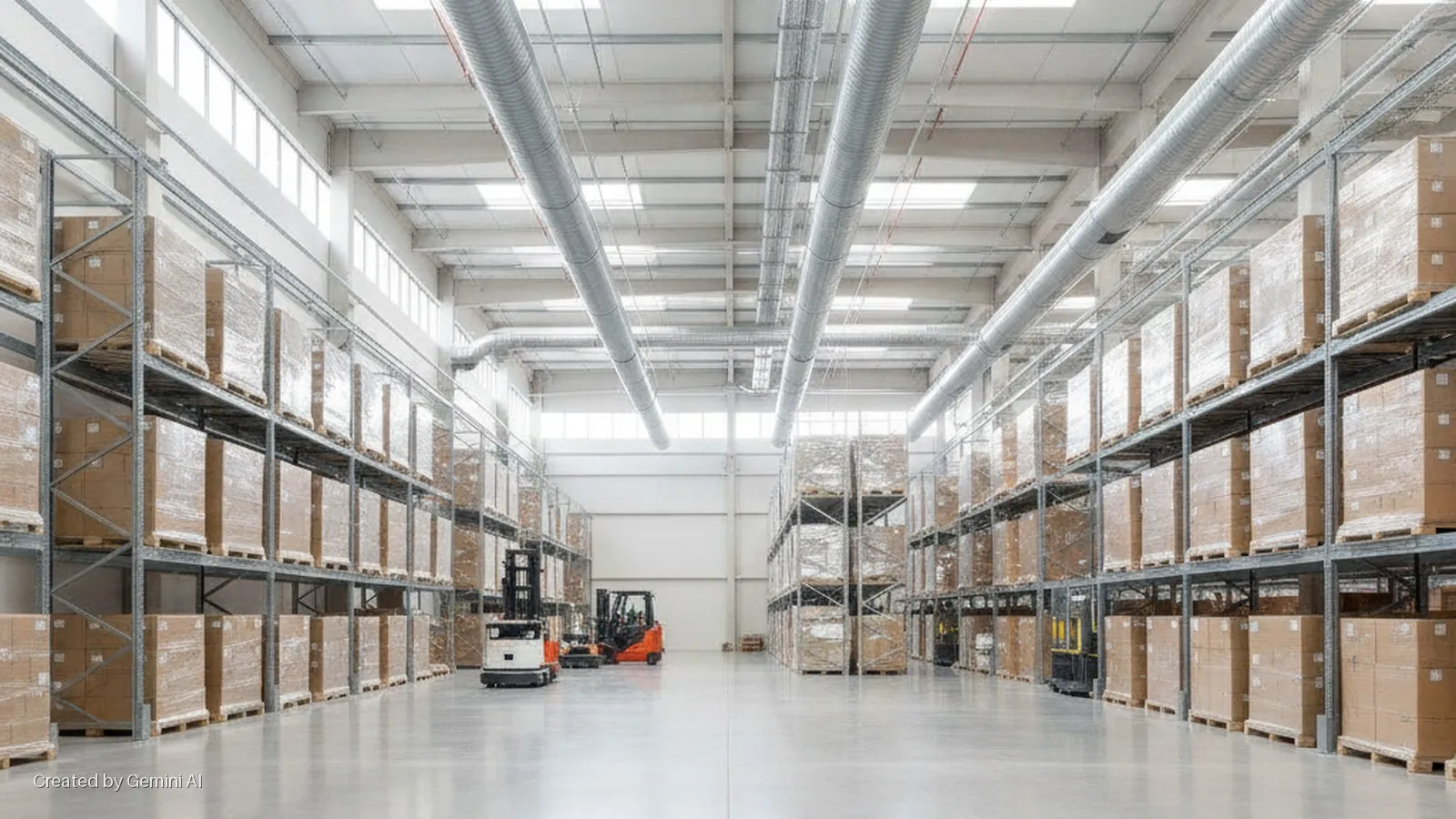
Argan, the French logistics real estate investment trust, has confirmed that three of its AutOnom-labelled warehouses delivered active summer cooling this year, using the same reversible heat-pump systems that provide heating in winter. The company says its Bain-de-Bretagne site, operated by logistics firm BSL, part of Dimotrans Group, maintained interior temperatures of 26–27°C when outdoor readings reached 40°C, a differential the company positions as up to 13°C cooler than outside.
The AutOnom concept, which Argan has been developing since 2022, combines rooftop photovoltaic generation, on-site electricity storage and reversible air-to-water heat pumps, managed through an integrated building management system. The company says on-site solar generation covers the electricity consumed by cooling, keeping the thermal management of the warehouse within a renewable-energy loop. Argan did not disclose the installed solar or storage capacity at any of the three sites, or the cooling load met by on-site generation versus the grid.
From gas boilers to reversible heat pumps
French logistics buildings have traditionally relied on gas-fired boilers for space heating, a carbon-intensive model that leaves warehouses without any active summer cooling. AutOnom replaces those boilers with electric heat pumps that reverse their refrigerant cycle in summer, chilling water circulated through unit heaters. Argan positions the transition as both a decarbonisation step and a quality-of-life upgrade for warehouse workers, who face acute heat-stress risk during extreme weather.
Céline Chatelain, QHSE and CSR Director at Dimotrans Group, said the system delivered measurable benefits from the first heatwave in June: "While outdoor temperatures reached 40°C, the temperature inside our warehouse remained at just 26–27°C. The difference was immediately noticeable for our teams." She also pointed to energy-cost predictability as a secondary benefit, noting that volatile electricity prices make on-site generation commercially attractive beyond its environmental credentials.
Market context
Argan is not alone in pursuing electrified, solar-integrated logistics real estate. Several pan-European logistics REITs and developers, including Prologis and Segro, have set targets for rooftop solar and low-carbon building systems across their portfolios. What distinguishes the AutOnom framing is the integration of storage and active thermal management, rather than solar generation alone, a more capital-intensive approach, but one that changes the energy cost profile for occupiers.
The commercial logic is sharpening. Extreme heat events are intensifying across France and southern Europe, raising regulatory and reputational pressure on logistics operators to protect workers. The EU's corporate sustainability reporting directive increases the scrutiny on occupiers' scope 1 and 2 emissions, which makes a landlord who can supply on-site renewable energy and eliminate gas consumption commercially differentiated rather than merely a nice-to-have.
Argan reported a portfolio of 3.9 million square metres across roughly 110 French warehouses, appraised at €4.3 billion as at 30 June 2026, generating €224 million in annual rental income. The company carries an investment-grade BBB- credit rating from Standard and Poor's, which matters because the capital cost of building or retrofitting heat-pump systems at scale is meaningful, and debt cost is sensitive to rating.
Milestones to watch
Argan has not disclosed what share of its existing portfolio carries AutOnom certification, nor what it would cost to retrofit older sites. The company noted a November general assembly to consider a merger project with WDP, a Belgian logistics REIT with a significant European footprint; if that transaction proceeds, it would change the scale and geographic scope of the AutOnom rollout materially. Investors tracking the green-building credentials of European logistics real estate will want to see audited energy and emissions data from AutOnom sites before treating the 13°C cooling claim as a portfolio-wide benchmark.