
Haffner Energy wins €3.2m Quebec order for first Multi-Energy Hub

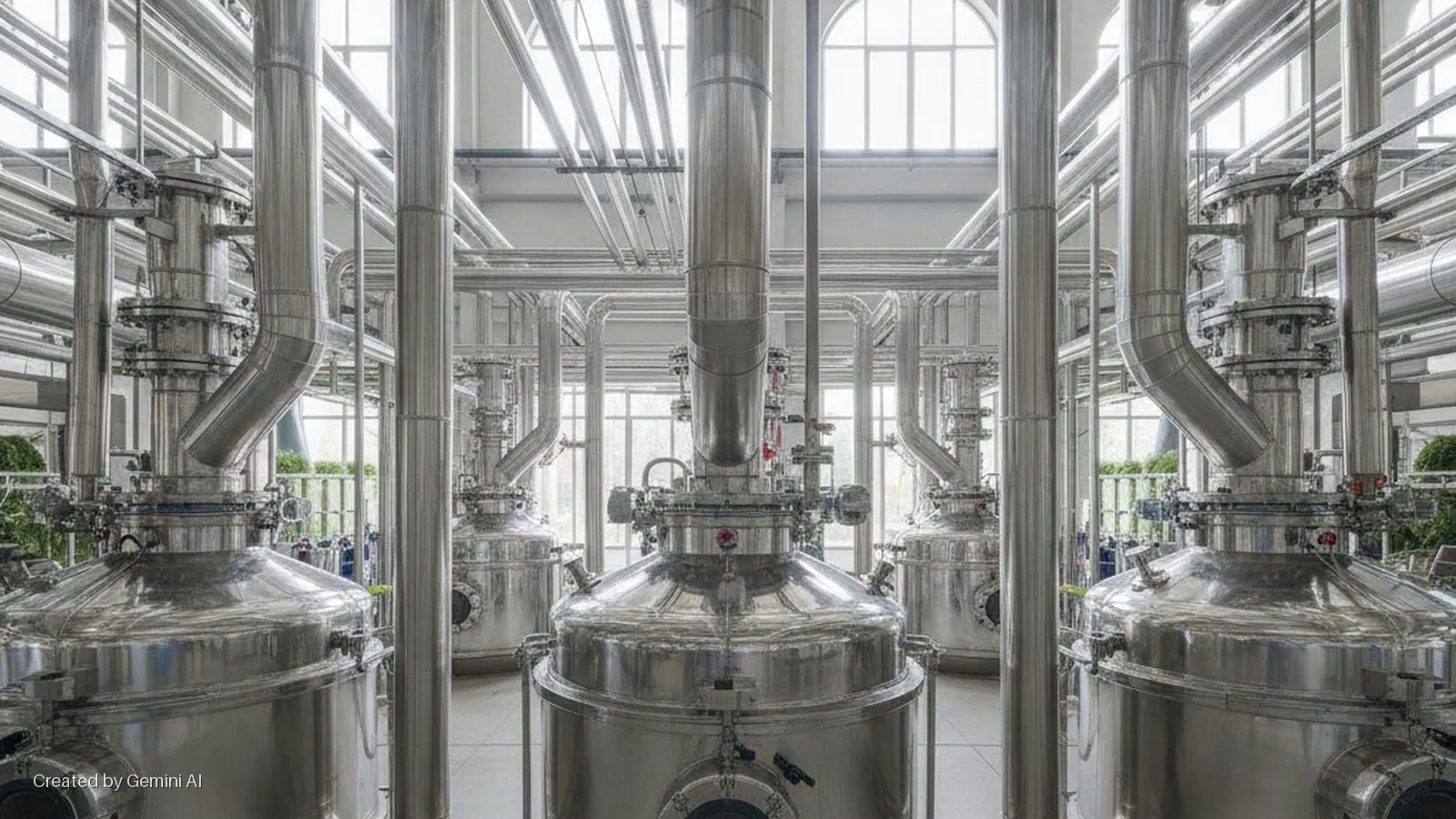
Haffner Energy, a French developer of biomass thermolysis and gasification technology, has received a €3.2 million firm order from INCAD (Centre d'Intégration de CArburants Durables), the project company building Quebec's first Multi-Energy Hub in the Bécancour Industrial and Port Park. The contract, signed on 25 September 2026, covers six equipment items already held in Haffner's inventory, plus associated engineering services.
The compressed payment schedule is notable for a company at Haffner's stage: a €480,000 down payment is due by 12 October 2026, and 75% of the total contract value will be invoiced and received within 30 days of FOB delivery, which is scheduled before the end of 2026. Because the equipment has already been manufactured, no significant new industrial cash outlay is required, and Haffner says a majority of the €3.2 million will be recognised as revenue in the current financial year.
The deal
The INCAD order sits alongside, but is legally separate from, a broader licence agreement Haffner has signed with Mundi Énergies for the Canadian market as a whole. Under that arrangement, Haffner received an upfront licence fee of €1 million and holds a 49% stake in Mundi Haffner Technologies Inc., the vehicle responsible for rolling out Haffner's technology across Quebec. Remaining equipment for the INCAD site will be manufactured in Canada under licence, not shipped from France.
The INCAD unit is designed to produce primarily 400 normal cubic metres per hour of renewable natural gas (RNG) from residual biomass, with commissioning targeted for the second quarter of 2028. The site will also produce biochar, a carbon-rich material used as a soil amendment that the company says sequesters approximately three times its own weight in CO2 equivalent over the long term. A portion of thermolysis oil will be reserved for demonstration campaigns aimed at qualifying the SB-HEFA process for sustainable aviation fuel (SAF) production. Haffner positions INCAD as a proof-of-concept that a single biomass feedstock can be converted into three distinct fuel and carbon-sequestration products at industrial scale.
Market context
Biomass thermolysis occupies an interesting position in the low-carbon fuels landscape. It competes with anaerobic digestion for RNG production and with Fischer-Tropsch and alcohol-to-jet routes for SAF, but distinguishes itself through the simultaneous production of biochar, which generates a carbon-removal co-benefit that can in principle be monetised through voluntary carbon markets. The multi-product model is commercially attractive but operationally complex: optimising yields across RNG, biochar and liquid fuels simultaneously at commercial scale has not yet been widely demonstrated.
INCAD is conceived as the first of around 20 Multi-Energy Hubs that Haffner and Mundi Énergies plan to develop progressively across Quebec. Subsequent hubs are said to target significantly higher capacities. For Haffner, whose revenues remained limited during a multi-year technology-development phase, the INCAD order marks a shift toward a recurring, multi-stream revenue model: equipment sales, engineering fees, licence royalties, and minority project stakes.
Philippe Haffner, chairman and chief executive, said the order marks "a new phase" for the company and that "revenue is set to accelerate very sharply from this year onwards." The statement is consistent with a developer moving from pre-commercial to early-commercial status, though investors will note that INCAD remains a single 400 Nm³/h demonstration project ahead of the larger capacity targets the partnership is projecting.
The policy backdrop in Quebec is supportive: the province's Energy Transition Valley in Bécancour is a designated industrial cluster for low-carbon energy, and Canada's broader clean-fuels agenda includes production incentives for RNG and an ongoing SAF mandate trajectory aligned with the International Civil Aviation Organization's net-zero 2050 framework. How those incentives interact with Haffner's licence-and-royalty model across the wider hub network will shape the economics of subsequent projects.