
General Fusion and General Atomics team up on LM26 diagnostics
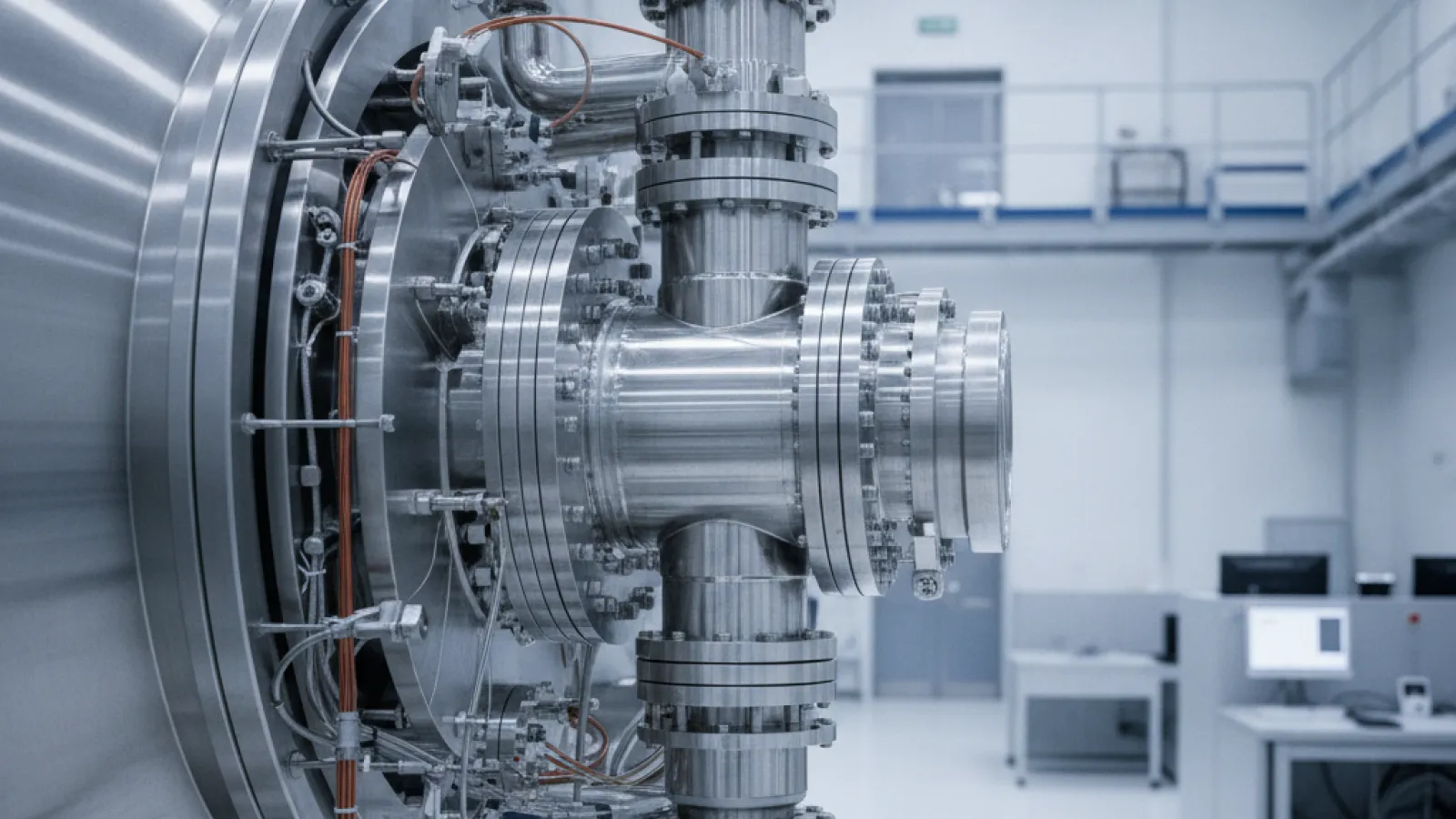
General Fusion has announced a collaboration with General Atomics Energy Group to develop advanced diagnostic systems for the second phase of its Lawson Machine 26 (LM26) fusion demonstration programme. The partnership centres on measuring plasma temperatures up to 10 keV — equivalent to 100 million degrees Celsius — a key technical milestone the Vancouver-based company is pursuing on its path toward commercial magnetised target fusion (MTF).
LM26, which General Fusion says it designed, built and began operating in under two years — beginning in early 2025 — compresses plasma using a lithium liner at 50% commercial-scale diameter. The machine is working toward a sequential series of plasma-heating milestones: first 1 keV (10 million degrees Celsius), then 10 keV, and ultimately the Lawson criterion — the combination of plasma temperature, density and confinement time at which a fusion reaction produces net energy.
The collaboration
General Atomics, which operates the US Department of Energy's DIII-D National Fusion Facility — the largest magnetic fusion research device in the United States — is advising on the diagnostic tools required to measure ion and electron temperature and density at the 10 keV milestone. In parallel, the organisation is reviewing data from ongoing LM26 plasma compressions as General Fusion works toward its nearer-term 1 keV target.
Wayne Solomon, Vice President of Magnetic Fusion Energy at General Atomics, said the collaboration connects "high-quality plasma measurements to design validation" — the kind of independent technical verification that turns experimental results into engineering inputs that funders and future customers can act on. General Fusion's chief executive Greg Twinney described cutting-edge diagnostics as "critical" to the programme, pointing to General Atomics' depth of expertise across fusion research and specialist electromagnetic technologies.
No financial terms for the collaboration were disclosed, and neither company gave a timeline for when the 1 keV milestone is expected to be achieved.
Market and capital context
Fusion energy sits firmly in the pre-commercial category: no private developer has yet achieved net energy gain at commercially relevant scale, though the sector has attracted significant venture and strategic capital over the past five years. General Fusion uses MTF — a hybrid approach that compresses magnetised plasma mechanically, avoiding the superconducting magnets of tokamak designs and the high-powered lasers of inertial-confinement systems. The company says this approach allows the use of more conventional industrial materials, which it argues makes durable, cost-effective machines more achievable.
General Fusion announced in January 2026 that it plans to go public via a business combination with Spring Valley Acquisition Corp. III (NASDAQ: SVAC), a special purpose acquisition company that previously brought NuScale Power — a small modular reactor (SMR) developer — and Eagle Nuclear Energy Corp. to public markets. The proposed transaction, which requires SVAC shareholder approval and regulatory clearance, remains subject to the filing of a definitive proxy statement with the US Securities and Exchange Commission. General Fusion's existing backers include a syndicate of energy venture capital firms, industry investors and technology funds.
The wider fusion sector is being watched closely by energy investors and policymakers as a potential long-duration firm-power source, particularly given rising electricity demand from data centres and industrial electrification. However, the distance between present plasma-physics milestones and a grid-connected fusion plant remains substantial, and commercial timelines across the industry have historically slipped.
The next concrete milestones for General Fusion are the 1 keV plasma-heating result and, thereafter, progression toward 10 keV — at which point the General Atomics diagnostic systems are designed to provide the validated measurements needed to underpin further development and investor confidence ahead of any public listing.