
Jackery expands home backup lineup for fall storm season

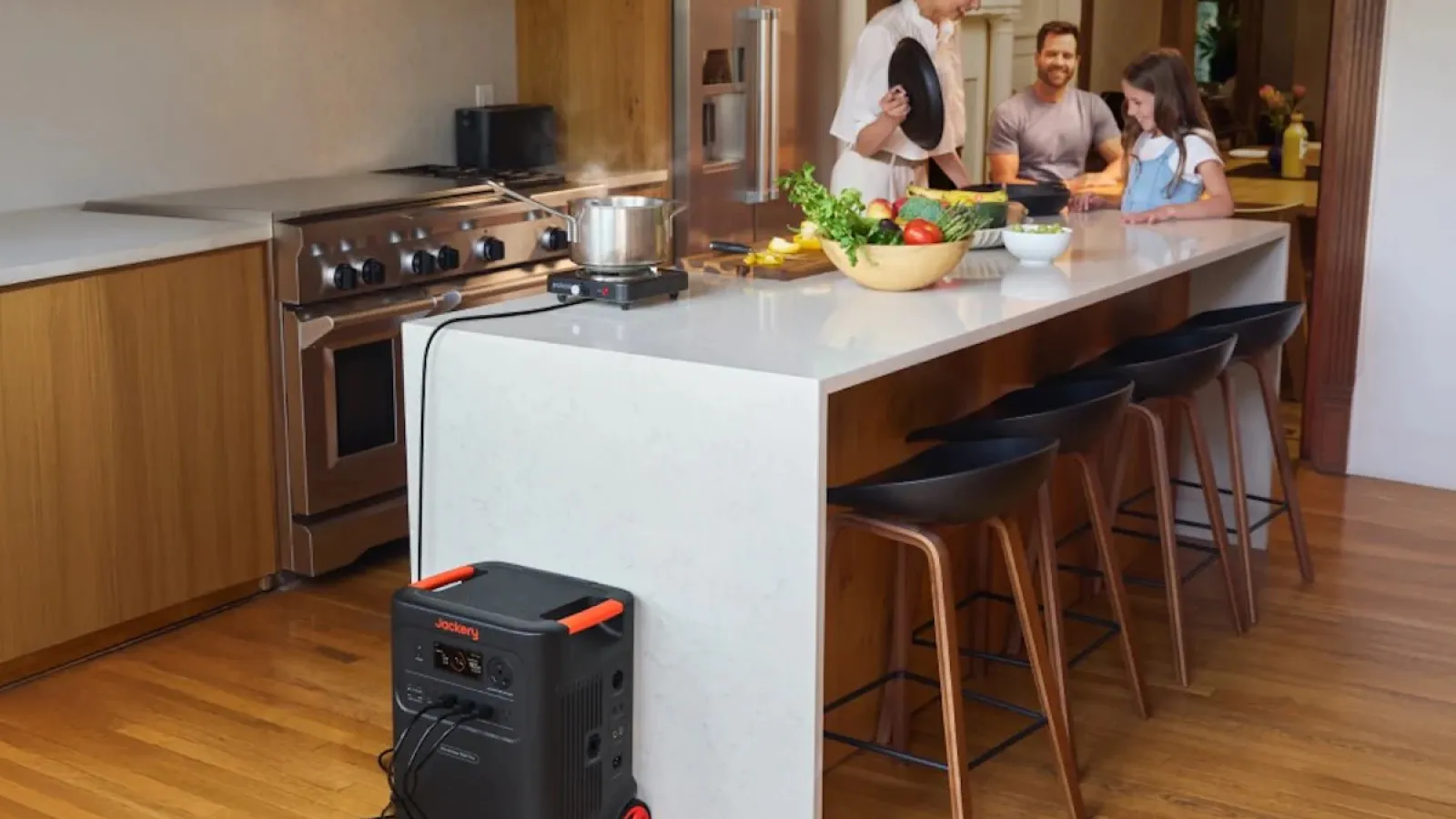
Jackery has released a four-product home backup lineup timed to National Preparedness Month in September, targeting US households facing outage risk from Atlantic hurricanes, West Coast wildfire-driven power shutoffs, and early winter storms in the Northeast. The Fremont, California-based consumer energy brand is positioning the range as a scalable entry point into residential battery backup, from a compact fridge-dedicated unit to a whole-home system expandable to 60 kWh.
The announcement is a product marketing exercise rather than a capital or deployment milestone, and Jackery has not disclosed revenue figures, unit shipment volumes, or new funding. The release carries limited hard data beyond the product specifications below.
The lineup
The flagship HomePower 3600 Plus offers 3,600 W of output and 3,584 Wh of baseline capacity, expandable to 21 kWh via a manual transfer switch. Jackery says the unit uses lithium iron phosphate (LFP) cells rated for 6,000 cycles, implying roughly 16 years of daily use, and switches to battery within 10 milliseconds during a grid interruption, a threshold relevant to keeping home-office equipment online.
The Solar Generator 5000 Plus pairs with a smart transfer switch for automatic rather than manual changeover. It is rated at 7,200 W continuous output and supports modular expansion to 60 kWh, with eight recharge pathways including high-voltage solar input. At that capacity it is sized to carry heating, ventilation and air-conditioning (HVAC), refrigeration and well pumps simultaneously.
Two smaller units complete the range. The FridgeGuard is a purpose-built appliance-level unit with a 2.6-inch profile and 1,024 Wh of capacity, expandable to 30 hours of refrigerator runtime with an add-on battery. The HomePower 2000 Plus V2 and HomePower 1000 Plus V2 are plug-and-play entry units starting at 2,048 Wh and 1,024 Wh respectively, each expandable without rewiring.
Market context
Residential battery backup is a fast-growing but fragmented segment sitting at the intersection of consumer electronics and distributed energy. It is distinct from utility-scale or behind-the-meter commercial storage, which involves grid interconnection agreements, project finance and long-term offtake contracts. Jackery operates at the consumer end: its products are sold through Amazon, Costco, Home Depot and Lowe's rather than through energy project developers or utilities.
The addressable market is expanding as grid reliability deteriorates in storm-prone and wildfire-risk regions, and as households electrify more appliances. Competitors include EcoFlow, Bluetti and Anker at the consumer level, while Tesla's Powerwall and Enphase's IQ Battery target the grid-connected residential segment with utility interconnection and solar integration. Jackery's positioning emphasises portability, indoor safety and no-electrician setup, differentiating it from grid-tied home energy systems that require professional installation and utility approval.
Policy tailwinds are modest at this product tier. The US Inflation Reduction Act's residential clean energy credit (Section 25D) covers battery storage systems installed with solar, but the consumer-grade, portable units Jackery sells are generally not eligible for federal tax credits, unlike permanently installed residential storage. That limits the policy-driven demand pull compared with grid-tied competitors, though storm-season anxiety is itself a significant market driver in regions with ageing transmission infrastructure.
Jackery cited over 150,000 five-star reviews as evidence of consumer traction but did not provide sales volumes, market share data, or financial results. The HomePower 1000 Plus V2 carries an early-bird price of $599 through 3 September, ahead of a $729 recommended retail price.