
Qnetic begins full-scale testing of 200 kWh Pulsar flywheel system

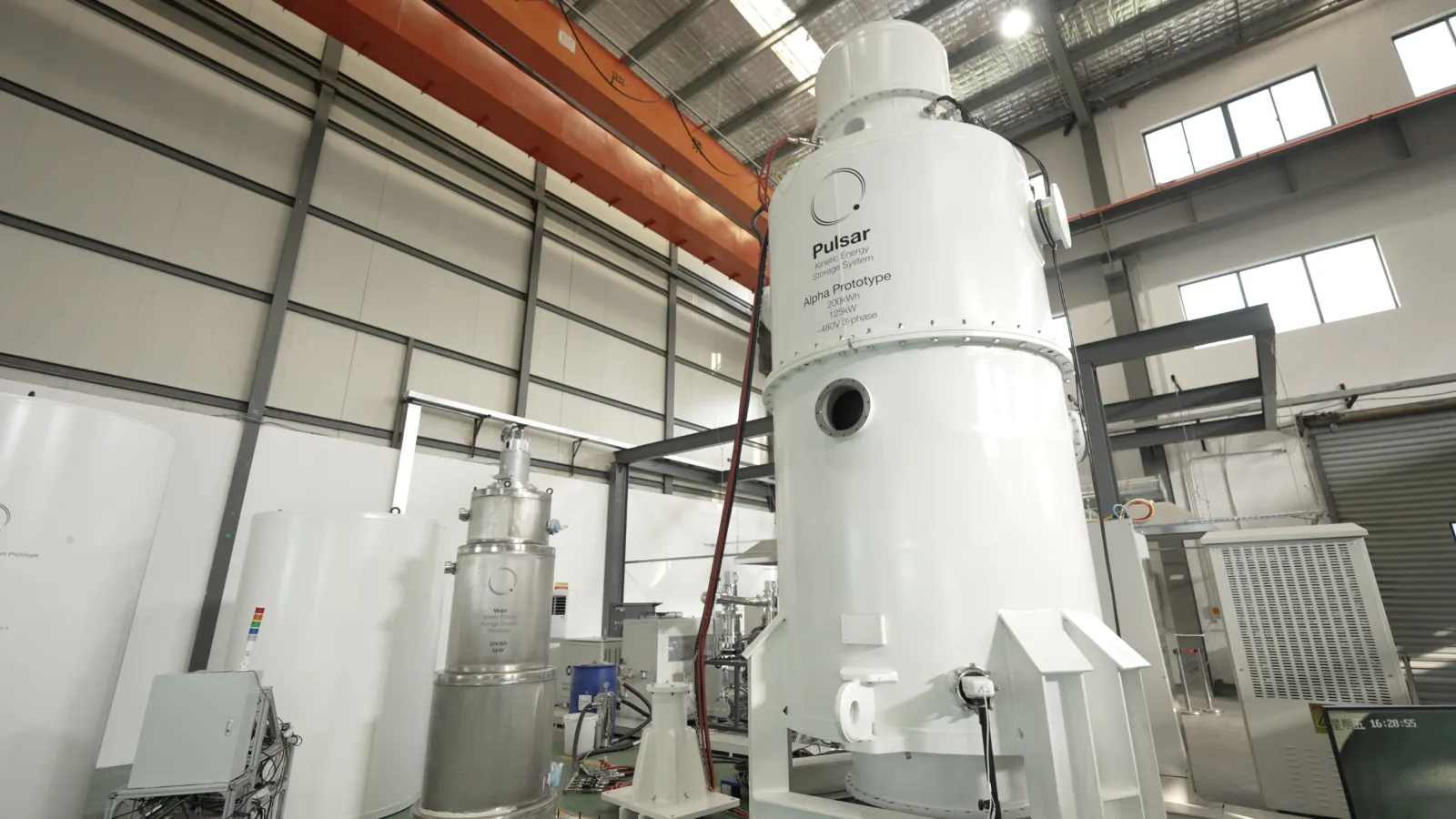
Qnetic has begun low-speed integrated testing of Pulsar, its first full-scale 200 kWh flywheel energy storage prototype, marking a step beyond the component-level validation the company completed earlier this year. The New York-based startup said the testing programme will advance through progressively higher rotational speeds as each stage is verified, with full-speed validation the eventual target before commercial deployment.
The initial test results carry some substance. Qnetic reported that Pulsar completed 100 continuous charge-discharge cycles with no faults or measurable capacity degradation. Tested separately, the system's motor produced 130 kW of power output at 97.3% efficiency at speeds exceeding 11,000 rpm, which the company said validates its power-conversion architecture. Chief executive Michael Pratt said the cycle testing is designed to confirm how major systems operate together rather than validate individual components in isolation. No commercial pricing, project pipeline or revenue figures were disclosed.
How flywheel storage works
A flywheel stores electricity mechanically rather than through an electrochemical reaction. An electric motor accelerates a rotor to high speed, converting electrical energy into kinetic energy; when power is needed, the same motor operates in reverse as a generator. The approach offers theoretically unlimited cycling with minimal degradation over time, which contrasts with lithium-ion batteries, whose cycle life and capacity decline predictably with use. The trade-off is energy density: flywheels typically store less energy per unit of volume and mass than lithium-ion, making them better suited to short-burst frequency-response and power-quality applications than to multi-hour bulk storage.
Qnetic is positioning Pulsar as a long-duration mechanical storage option, though at 200 kWh the prototype sits at the smaller end of grid-scale storage. The company is targeting data centres, renewable energy integration, grid balancing, microgrids and industrial power resilience as its primary markets.
Independent validation and market context
Qnetic is sharing test data with the Electric Power Research Institute (EPRI) through its energy storage deRISKED programme, which combines prototype data with independent performance, safety and commercial-readiness analysis. The programme evaluation was sponsored by Sacramento Municipal Utility District (SMUD), a California public utility. EPRI's involvement is notable because utilities in the deRISKED network receive the findings, giving Qnetic a route to procurement conversations that might otherwise take years to develop through direct sales.
The flywheel storage market is a niche within the broader energy storage landscape, which is dominated by lithium-ion at grid scale and increasingly contested by flow batteries, iron-air chemistry and compressed-air systems for longer durations. Several established flywheel developers, including Beacon Power in the United States and Levistor in the UK, have operated grid-connected flywheels for frequency regulation for over a decade. Qnetic's differentiation claim rests on the scale and energy capacity of the Pulsar design relative to earlier-generation units, though it has not yet demonstrated the system at full operating speed.
For investors and utilities watching the space, the key near-term milestones are full-speed validation, a named pilot deployment, and independent EPRI findings shared with the utility network. Qnetic has not disclosed its funding history, investor base, or commercialisation timeline in this release.