
Rock Cut Solar marks first year with $163k in subscriber savings

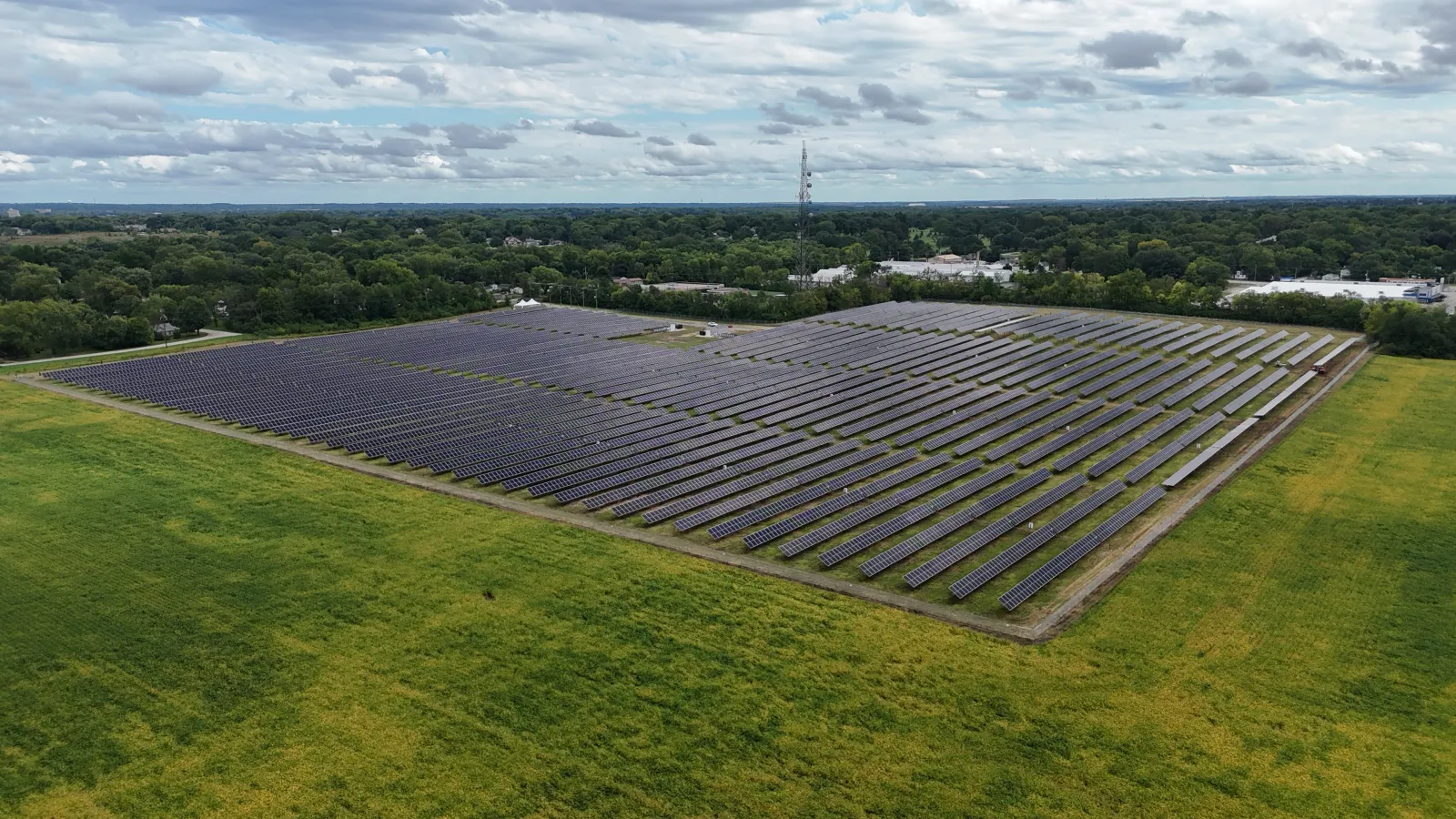
A 6.2 MW community solar installation on Rockford's west side has completed its first full year of operation, delivering an estimated $163,000 in combined electricity-bill savings to nearly 690 residential and commercial subscribers, according to developer Summit Ridge Energy and project partner Trajectory Energy Partners.
The site, originally named Rock Cut Solar and now rededicated as Mark Raeder Legacy I in honour of the late Summit Ridge co-founder, covers 35 acres and comprises 20,000 panels. It is described as one of the largest community solar projects on the ComEd distribution network. OSF Saint Anthony Medical Center, a local nonprofit hospital, is the project's anchor commercial subscriber, and saved more than $65,000 in its first year. Residential customers collectively saved approximately $98,000. More than a third of subscribers qualify as lower-income households and receive a 50% bill discount; the remainder receive savings of up to 20%.
The deal
The project received an Illinois Shines Community Driven Community Solar (CDCS) Renewable Energy Credit incentive contract, which allows state programme incentives to be passed through to subscribers. Construction ran from August 2024 to April 2025, with the site placed into service in August 2025. Local union labour from Carpenters Local 792, the International Union of Operating Engineers Local 150, and the International Brotherhood of Electrical Workers Local 364 carried out electrical, carpentry and construction work, logging more than 33,000 working hours in total. Summit Ridge and Trajectory have now collaborated on 15 Illinois solar projects.
Steve Raeder, founder and chief executive of Summit Ridge Energy, described the project as "a promise kept," adding that renaming the site after his late brother was the company's way of ensuring "his commitment to this community endures for the life of the project."
Market context
Illinois has become one of the more developed community solar markets in the United States, shaped by the 2016 Future Energy Jobs Act and the 2021 Climate and Equitable Jobs Act (CEJA). ComEd, the northern Illinois utility owned by Exelon, reports more than 300 community solar projects interconnected to its system, expects to exceed 400 by year-end 2026, and has connected a total of 1.8 gigawatts of distributed energy to its grid. Community solar works by allowing customers to subscribe to a share of a remotely sited solar array and receive credits on their utility bills proportional to their allocation, without installing rooftop panels. It is particularly significant for renters and lower-income households who cannot access rooftop solar directly.
The CDCS designation adds a community-engagement layer beyond standard community solar: a local partnership that included Rockford Area Habitat for Humanity and Get Connected 815 was involved in zoning advocacy, site screening and subscriber outreach from the earliest planning stages. The model is increasingly cited by state policymakers as a template for equity-focused distributed generation.
Policy path
Illinois's CEJA contains specific carve-outs and incentive structures for projects serving low-income subscribers, including the 50% bill discount seen at Mark Raeder Legacy I. The Illinois Shines programme administers the REC contracts that underpin project economics, creating a state-funded demand signal for developers. That policy architecture is currently intact, though the programme has faced periodic contract-allocation backlogs that have slowed project timelines across the state.
For Summit Ridge and Trajectory, the next milestones will be the continued expansion of the Illinois pipeline and the conversion of the more than 90 sites Trajectory currently has under development. Summit Ridge separately reports a national portfolio of more than 3 GW of solar and storage projects operating or in development, financed by over $7 billion in project capital raised since 2017.