
Scout Clean Energy breaks ground on 150 MW Ottawa BESS project
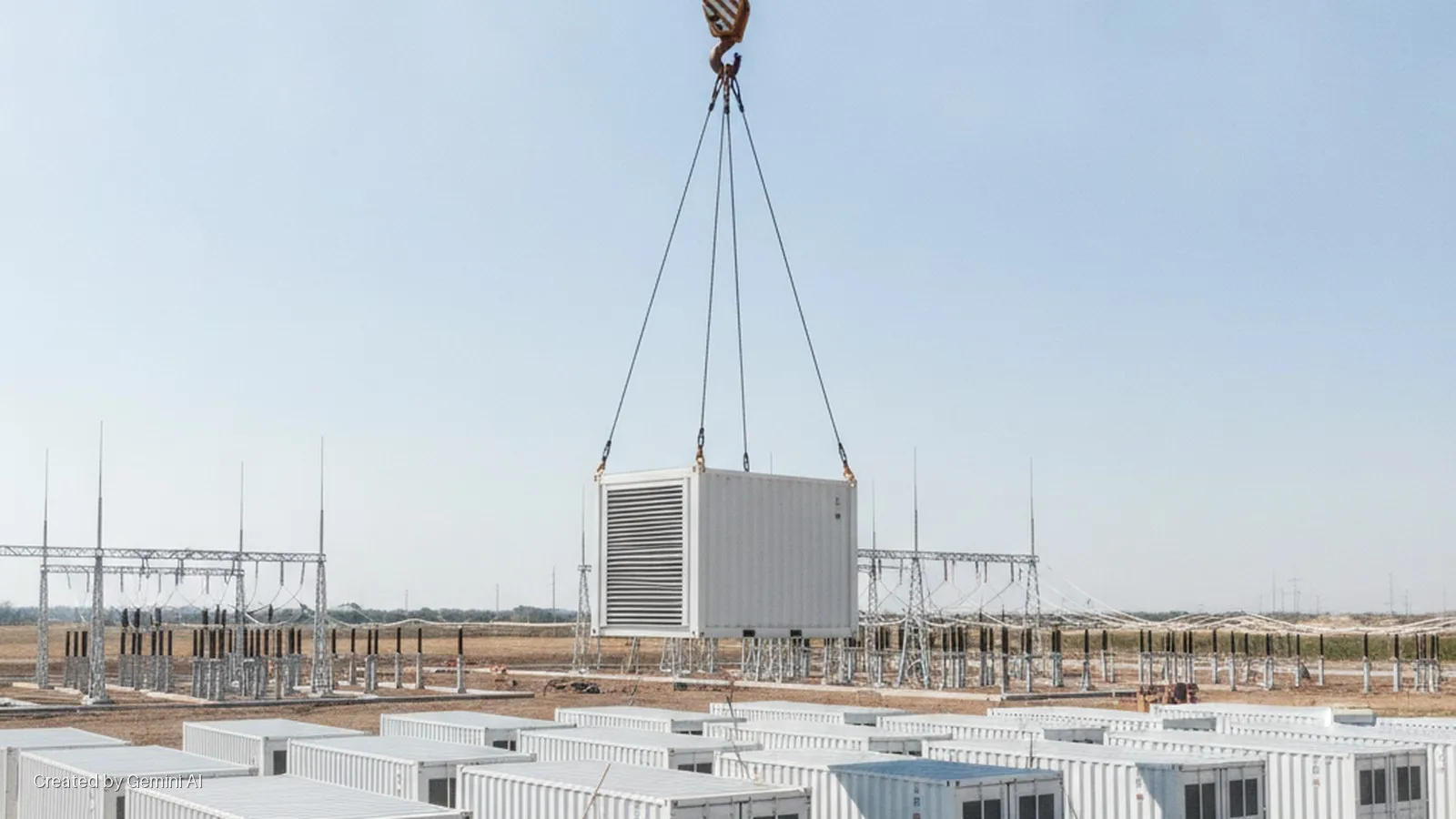
Scout Clean Energy has begun construction on the Trail Road Battery Energy Storage System (BESS), a 150 MW lithium iron phosphate (LFP) grid-scale storage project located near Richmond, Ontario. The project is being developed as a joint venture with the Algonquins of Pikwàkanagàn First Nation, with commercial completion targeted for 2027. The construction start coincided with the opening of Scout's new Ottawa office, which the company says will serve as the hub for its Canadian development pipeline.
Scout is a portfolio company of Brookfield Asset Management (NYSE: BAM), the alternative asset manager with more than $1 trillion in assets under management. Brookfield acquired Scout in 2022 and has since backed the developer's expansion into Ontario. The press release did not disclose the project's capital cost, a contracted price per megawatt-hour, or the identity of the grid operator or offtaker that will purchase the stored capacity.
The project
Trail Road will deploy LFP battery chemistry, which is increasingly favoured for grid-scale applications over nickel-manganese-cobalt (NMC) alternatives on account of its lower thermal risk and longer cycle life, though at a modest round-trip efficiency penalty. At 150 MW, the system is a mid-scale installation by North American standards — large enough to provide meaningful grid-balancing services, but below the 400–500 MW threshold of the largest utility-scale projects now in development across the US and Canada.
Ontario Minister of Energy and Mines Stephen Lecce attended the ground-breaking and linked the project to rising provincial electricity demand. "This 150 MW battery storage project will strengthen grid reliability and help meet fast rising electricity demand across the region," he said. Ontario's grid operator, the Independent Electricity System Operator (IESO), has flagged accelerating load growth — driven by industrial electrification, data-centre expansion and population growth in the Greater Toronto Area and Ottawa corridor — as a central challenge for the province's supply adequacy planning.
Market context
Grid-scale battery storage in Canada has moved from pilot scale to procurement-driven deployment over the past three years, with Ontario at the forefront following a series of IESO competitive procurements. LFP systems in the 100–300 MW range have become the dominant procurement format, with several projects in various stages of development across the province. The Indigenous joint-venture structure at Trail Road reflects a broader industry shift: provincial permitting and social licence increasingly require meaningful equity participation and benefit-sharing agreements with First Nations, not merely consultation.
Scout's parent, Brookfield, operates one of the world's largest renewable power portfolios and has been an active capital deployer across wind, solar and storage in North America. The Brookfield ownership backstop provides Scout with balance-sheet depth that smaller independent developers typically lack, and positions the company to pursue the larger advanced-stage pipeline — which the release describes as approximately 2,600 MW across North America — without relying solely on project-by-project third-party financing.
The release did not disclose whether Trail Road has been contracted under an IESO procurement mechanism or holds a bilateral agreement with a load-serving entity, which would be the key commercial detail for investors assessing project-revenue certainty. Confirmation of contracted revenues and a detailed construction timeline will be the milestones to watch before the 2027 target completion date.