
Vortex Energy acquires Saskatchewan salt permit for cavern storage

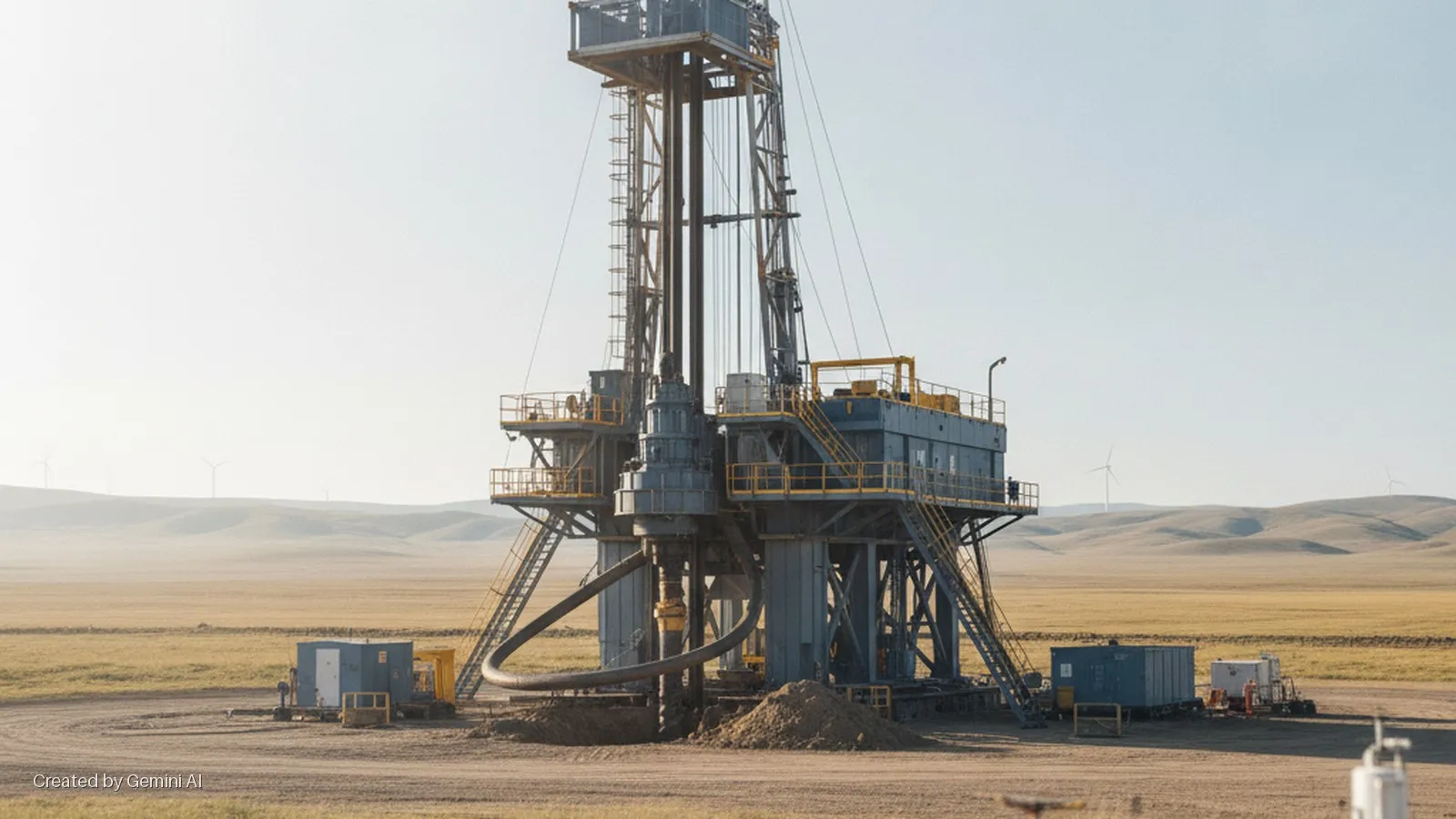
Vortex Energy Corp. has signed an asset purchase agreement to acquire the Meadows Project, a 21,609-hectare mineral permit in west-central Saskatchewan, from Global Strategic Minerals Corp. for C$255,000 in cash. The transaction is expected to close around 1 October 2026, subject to regulatory approvals and permit-transfer registration.
The company is acquiring 100% of Saskatchewan Subsurface Mineral Permit SMP273, along with associated technical data and governmental authorisations. Beyond the purchase price, Vortex will assume an annual permit rental that steps up from roughly C$43,000 in years one through five to approximately C$108,000 in years six through eight, plus a work commitment of around C$9.81 million spread over eight years from July 2026.
What Vortex is buying
The Meadows permit sits within the Elk Point Group, a geological formation known for thick salt-bearing intervals identified in historical wells across the area. Vortex says that regional evidence supports an exploration programme targeting salt deposits with potential applications for two energy-storage technologies: compressed air energy storage (CAES), which pressurises air into underground caverns and releases it to drive turbines, and hydrogen storage, which uses salt caverns as long-duration, large-volume reservoirs for gaseous hydrogen.
Vortex is careful to flag that the presence, thickness, continuity and quality of salt beneath the permit remain unconfirmed, and that further technical work is required before any development scenario can be evaluated. The company is an exploration-stage issuer; no commercial extraction or storage has taken place at Meadows.
Market context
Salt-cavern storage is attracting growing interest as a potential infrastructure layer for both the hydrogen economy and grid-scale long-duration energy storage (LDES). Conventional compressed-air energy storage has a decades-long operating history in Germany and the United States, but purpose-built hydrogen salt caverns at commercial scale remain largely pre-commercial outside a handful of demonstration projects. The appeal is volume: caverns can hold orders of magnitude more energy than surface-mounted battery installations, making them theoretically attractive for seasonal balancing of variable renewable generation.
The competitive landscape for salt-cavern hydrogen storage includes a cluster of European developers, several backed by energy-majors or national governments, pursuing projects in the UK Southern North Sea, the US Gulf Coast and northern Germany. Canada's prairie provinces are a less-explored frontier, though the Elk Point formation's stratigraphy is well-documented in the oil and gas literature.
Vortex already holds the Robinson River Salt Project in Newfoundland and Labrador, a 23,500-hectare block also prospective for salt and hydrogen cavern storage, giving the company a two-project exploration portfolio in Canadian salt geology. The company also holds uranium exploration assets in the Athabasca Basin, a different strategic direction that investors may seek clarity on.
Policy and capital read-across
Canada's federal hydrogen strategy and the Clean Hydrogen Investment Tax Credit introduced in the 2023 budget both support the economics of hydrogen production and, indirectly, storage infrastructure. Provincial-level support varies; Saskatchewan's government has backed carbon capture and hydrogen pilot programmes, though no specific incentive for salt-cavern development was cited in Vortex's release.
For investors, the key near-term milestones are regulatory approval and permit transfer in the days around the 1 October closing date, followed by the initiation of a technical work programme to confirm salt presence and cavern suitability. At C$255,000 acquisition cost and an eight-year work commitment totalling roughly C$9.81 million, the Meadows Project is a modest early-stage bet on a storage technology that, if commercially validated, would sit at the intersection of the hydrogen economy and grid-scale LDES, two of the most capital-intensive themes in the current energy transition.