
IGV Housing launches green building training cohort in Port Alberni
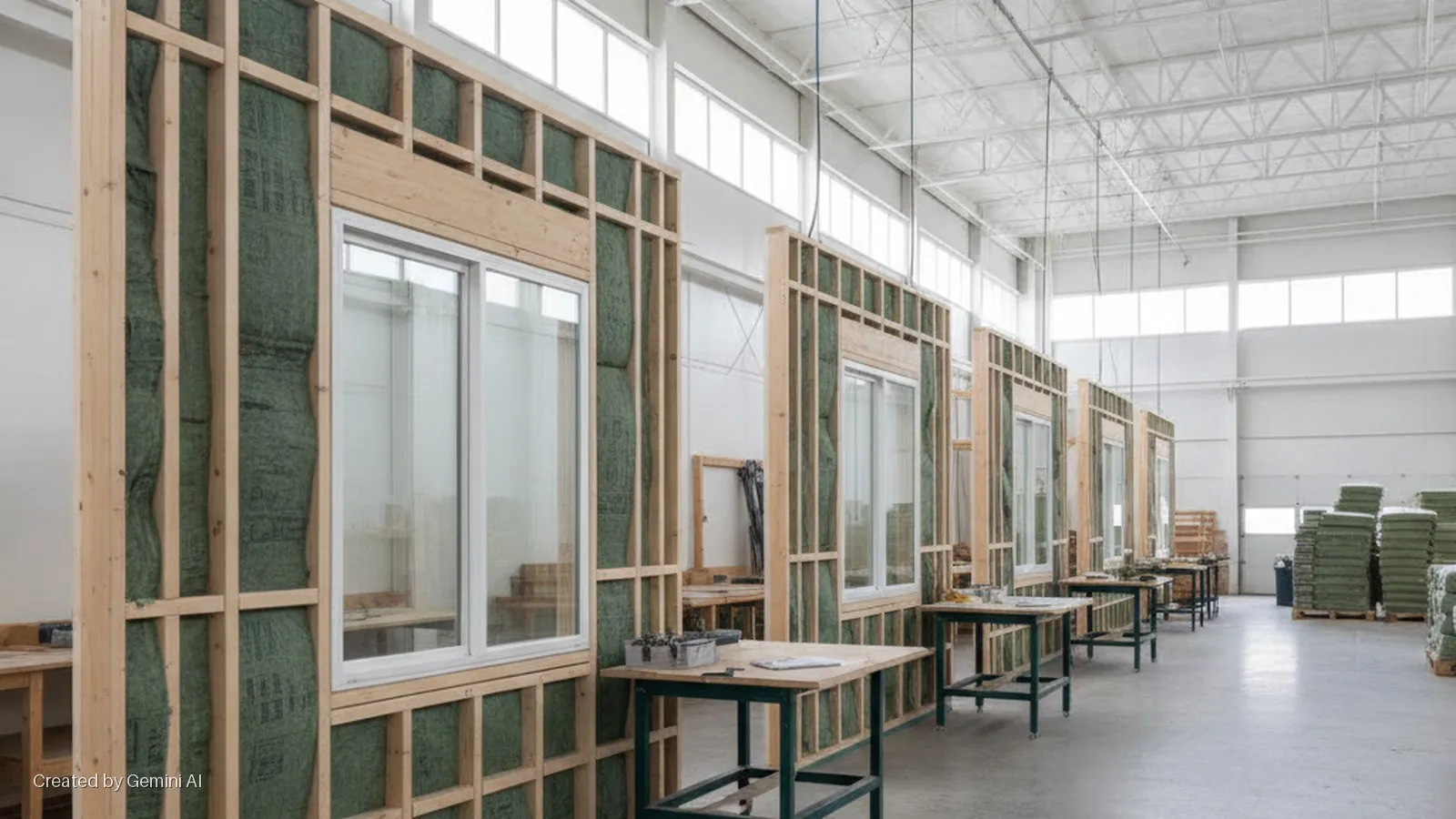
IGV Housing, Synergy Foundation and North Island College have launched a second cohort of a fully funded green building training programme in Port Alberni, British Columbia, as the modular-housing manufacturer expands its local workforce. The programme, co-delivered with WorkBC, follows a first cohort in which 15 trainees completed the curriculum and 12 were hired by IGV Housing as full-time Production Operators, with the remaining three placed elsewhere.
The second cohort, which began on 19 May 2026, is expected to run until 19 June and will add a further 15 full-time employees to IGV Housing's Port Alberni facility. Since August 2025, the company says it has grown its headcount from 12 to 45 employees, making the workforce-pipeline arrangement a material input to its production ramp-up.
The programme
Trainees acquire practical skills and safety certifications relevant to green construction and off-site manufacturing. Those hired by IGV Housing support the production of pre-engineered building components — including SmartCore volumetric units and wall panel systems — in a controlled factory environment. The company describes the roles as entry points to technical advancement and team-leadership tracks as the facility scales.
The programme was explicitly designed to absorb workers displaced by contraction in Port Alberni's forestry sector. Western Forest Products' Alberni Pacific Division has been indefinitely curtailed, and San Group's local sawmill operations have shed jobs, leaving a pool of experienced manufacturing workers without local employment. The first cohort included displaced sawmill workers, older workers, and people who had previously been required to commute away from the region for work.
Market context
IGV Housing operates in the off-site and modular construction segment — a category that has attracted growing interest from both developers and policy-makers as a potential lever on housing supply and construction-cost inflation. The company's hybrid model, which combines factory-built components with on-site assembly, is positioned by IGV as a faster and more cost-predictable alternative to conventional stick-build delivery.
Off-site construction in Canada remains a fragmented market. Workforce pipelines of the kind IGV is developing with North Island College are a recurring constraint in the sector: factory-based housebuilding requires precision-manufacturing skills that sit outside conventional construction trades, and many developers have found that labour availability, not capital, is the binding constraint on volume growth. The IGV model — where a training provider delivers a curriculum aligned to a single employer's production process — is structurally similar to approaches used in the UK's modular-housing sector and by automotive-adjacent manufacturers repurposing industrial labour pools.
Synergy Foundation, whose involvement gives the programme a circular-economy framing, is a nationally recognised body supporting green-economy transitions in Canadian communities. The foundation's participation signals that the programme is being positioned not just as workforce development but as part of a broader economic-diversification narrative for a resource-dependent community in transition.
Policy read-across
The programme is fully funded, with WorkBC — the British Columbia government's employment and skills-training agency — among the supporting partners. This places it within Canada's broader federally and provincially co-funded skills-transition apparatus, which has been directing resources toward green-economy job creation as part of the country's clean-growth commitments. However, the release does not specify the funding quantum, which public programmes contributed, or the per-trainee cost, limiting any assessment of replicability or policy leverage.
IGV Housing does not yet disclose production volumes, revenue, or the pipeline of housing projects supplied from the Port Alberni facility. Investors and developers tracking the modular sector will watch for announcements on project offtake, capacity utilisation, and whether the workforce model is extended to future cohorts as the company continues its stated growth trajectory.