
iSpring launches WRO4000 whole-home reverse osmosis system

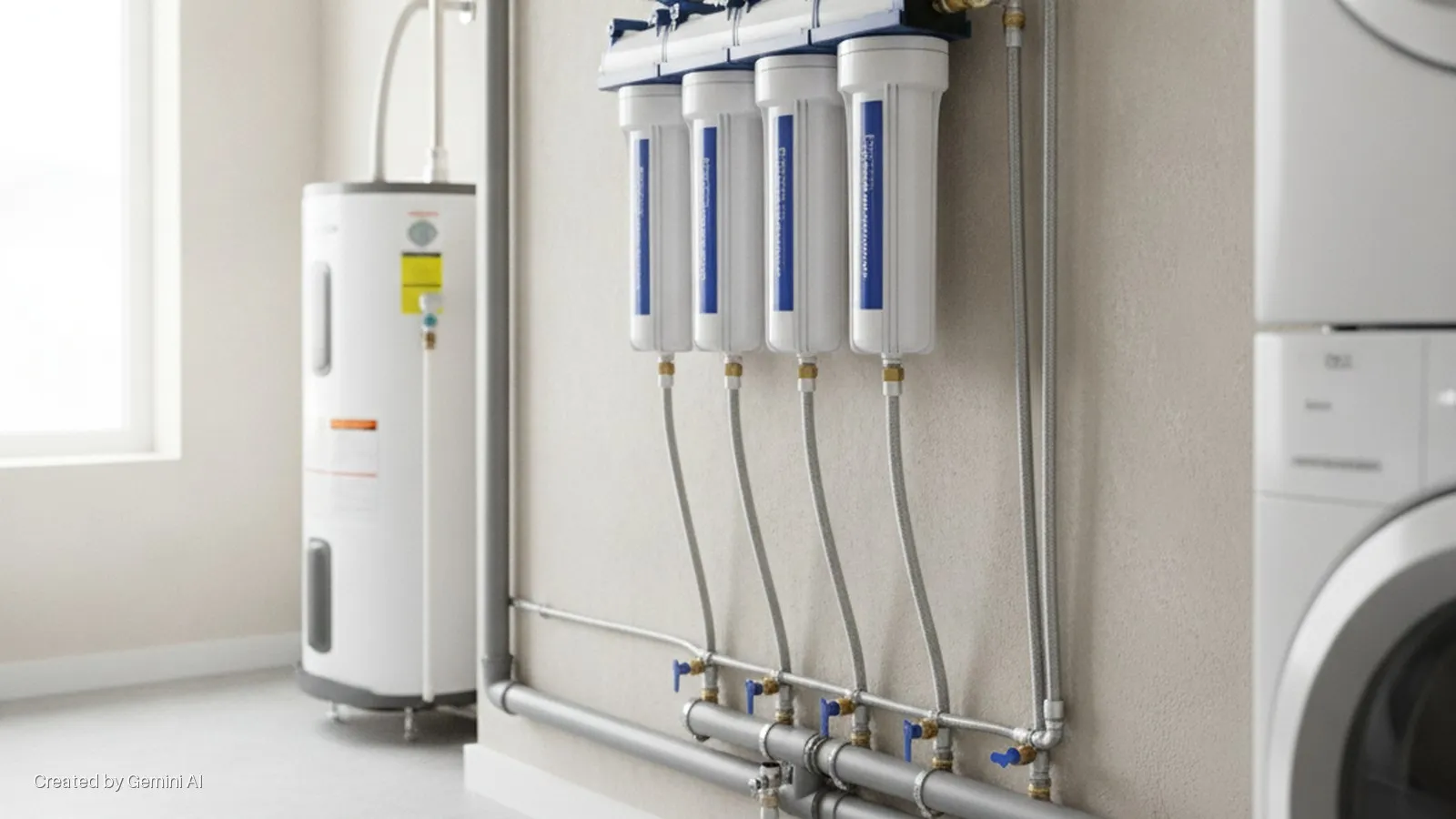
iSpring Water Systems has launched the WRO4000, a whole-house reverse osmosis (RO) system that the Georgia-based manufacturer says replaces the patchwork of separate devices many households currently use for water treatment. The unit handles sediment filtration, scale management, RO purification, ultraviolet (UV) disinfection and real-time water-quality monitoring in a single installation on the home's main supply line, treating up to 4,000 gallons per day.
The WRO4000 is priced as a consumer product, with an introductory discount of up to $800 running from 17 September to 14 October 2026. iSpring did not disclose the full retail price, unit sales targets, or revenue projections in its release.
The product
The system's seven treatment stages combine a spin-down sediment filter, KDF media, an electromagnetic descaler, an ultrafiltration membrane, an RO membrane, a UV filter and a carbon block polishing stage. iSpring says the RO membrane reduces contaminants including heavy metals, per- and polyfluoroalkyl substances (PFAS), microplastics and fluoride, while the carbon stage addresses residual chlorine and odours.
Built-in sensors feed a local LED display and a web-based dashboard accessible via smartphone or computer, reporting total dissolved solids (TDS) levels, filter lifespan, flow rates and storage tank status. An automatic flushing function runs on a configurable schedule, and the system sends alerts if it detects leaks, low inlet pressure or abnormal output. iSpring also cites a 2:1 pure-to-drain ratio, which it says represents up to eight times the water efficiency of conventional point-of-use RO units, though that comparison is not independently verified.
Market context
Whole-home water filtration is a fragmented consumer market sitting at the edge of the water-technology sector. Point-of-use RO, water softeners and UV disinfection have historically been sold as separate products by separate trades, and integration into a single managed system is a direction several manufacturers are pursuing. The market context for this product launch is primarily consumer home improvement rather than utility-scale water infrastructure.
From a cleantech perspective, the story is narrow. PFAS contamination of municipal and private water supplies has become a regulatory focus in both the United States and the European Union, with the US Environmental Protection Agency finalising maximum contaminant level rules for several PFAS compounds in 2024. That regulatory backdrop is creating demand for household-level treatment options, particularly in areas where municipal systems have not yet achieved compliance. The WRO4000's PFAS reduction claim is therefore commercially timely, though iSpring does not cite third-party test data or reference specific NSF/ANSI certification standards in the release.
The product's "water efficiency" positioning is also relevant in regions facing supply constraints, where reducing wastewater from residential RO systems is a genuine concern. Conventional household RO units can waste three to five gallons of water per gallon of purified output; a 2:1 ratio, if verified, would represent a meaningful improvement.
iSpring has not disclosed whether the WRO4000 carries NSF/ANSI 58 certification for RO systems, which is the standard benchmark for contaminant reduction claims in the US residential market. That certification status will be a key question for buyers and retailers.