
CRC completes $63m Crimson midstream buy with CO2 pipeline option

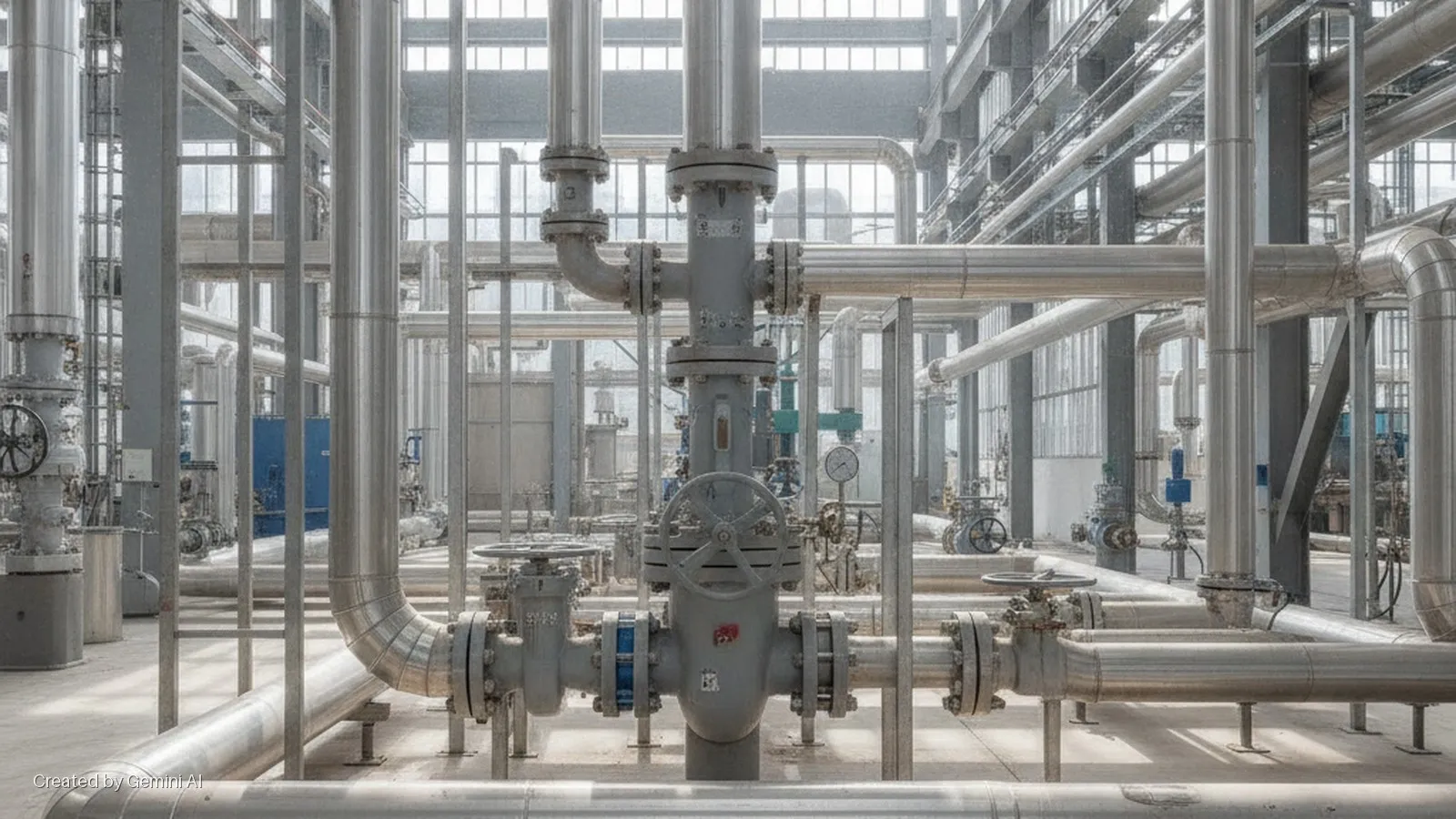
California Resources Corporation (NYSE: CRC) has completed its approximately $63 million all-cash acquisition of Crimson Midstream Holdings from CorEnergy Infrastructure Trust. The deal, which received California Public Utilities Commission approval on 13 August 2026, gives the state's largest oil producer a diversified midstream network of pipelines it says will improve delivery of California-produced barrels to higher-value markets.
The purchase price was confirmed at closing; no debt was assumed and no earn-out provisions were disclosed. Jefferies served as financial adviser to CRC, while Evercore advised CorEnergy. CRC's third-quarter guidance indicates it expects Crimson to contribute roughly $1 million to $2 million in general and administrative expenses and a similar range of capital requirements in the partial quarter following the 1 September close.
The deal
Beyond the near-term operational logic, CRC's chief executive Francisco Leon pointed to a strategic optionality angle. "Crimson's pipeline corridors add to the broader set of options we'll continue to evaluate as we look at longer-term development of CO2 transportation across California," he said. That framing ties the midstream acquisition to CRC's carbon management subsidiary, Carbon TerraVault (CTV), which is pursuing a series of carbon capture and storage (CCS) projects to inject CO2 captured from industrial emitters into depleted underground reservoirs for permanent sequestration.
The pipeline-as-CO2-transport angle is speculative at this stage. Leon used conditional language throughout, and CRC gave no timeline, volume projections, or capital budget for any CO2 repurposing of the Crimson network. Investors should treat that optionality as early-stage framing rather than a near-term commercial commitment.
Market context
CRC occupies an unusual position in the California energy market: a conventional oil and gas producer that has built a carbon management business on top of its subsurface expertise, positioning CCS project development as a revenue diversifier as state policy tightens on upstream oil. CTV's approach, injecting industrial CO2 into CRC's depleted reservoirs, is one of several subsurface storage models competing for long-term commercial viability alongside direct air capture (DAC) and bioenergy with CCS (BECCS).
The broader CCS infrastructure build-out in the United States is being shaped by the 45Q tax credit, which offers up to $85 per tonne for CO2 sequestered in saline formations or depleted reservoirs, with a more complex regime for enhanced oil recovery. CRC has publicly cited 45Q as a commercial enabler for CTV. The durability and value of that credit is a key variable for any investor modelling CTV's returns.
Midstream pipeline repurposing for CO2 transport is an active theme across the US energy sector, with several operators exploring whether existing hydrocarbon infrastructure can be retrofitted or redeployed for carbon dioxide service. Regulatory, safety, and commercial hurdles remain significant, and no large-scale CO2 pipeline network has yet achieved commercial scale in California.
Policy path
California's Low Carbon Fuel Standard and the state's broader cap-and-trade programme create a local policy environment that in principle supports CCS-linked credit generation. However, the California Air Resources Board's methodologies for crediting geological sequestration continue to evolve, and CRC has not disclosed whether CTV projects have received regulatory approval to generate compliance credits.
CRC plans to update its full-year 2026 guidance alongside its third-quarter earnings release. Investors tracking the CCS angle will want to see named industrial offtakers for CTV, permitted injection volumes, and any contracted CO2 price before assigning material value to the pipeline optionality flagged at today's close.