
Aemetis posts Q2 profit on 45Z credits and RNG volume surge

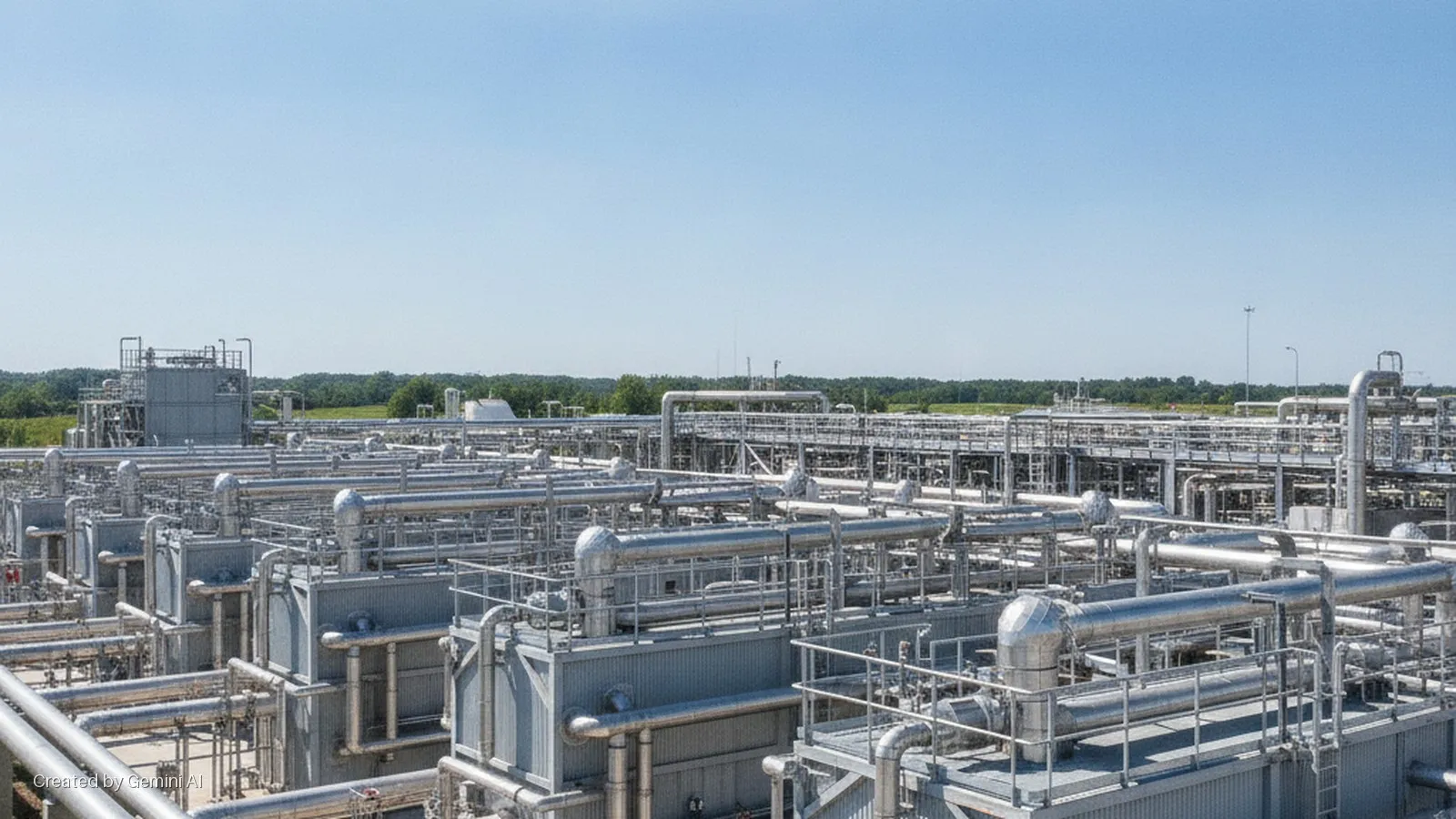
Aemetis (NASDAQ: AMTX), a California-based renewable fuels producer, reported revenues of $62.7 million for the second quarter of 2026, up 20% year on year, as higher dairy renewable natural gas (RNG) volumes and newly recognised US production tax credits pushed the company to its first quarterly operating profit in at least two years.
Operating income reached $5.8 million for the quarter, compared with an operating loss of $10.7 million in the same period of 2025. The net loss narrowed to $9.4 million from $23.4 million, with the improvement driven largely by $8.6 million of Section 45Z production tax credit income, lower delivered corn costs, and rising sales of low-carbon fuel standard (LCFS) credits in California.
RNG volumes and credit economics
Dairy RNG sales volume grew 38% to 146,900 MMBtu in the quarter, against 106,400 MMBtu a year earlier. The company said ten digester cleanup skids have been received and two further dairy digesters are expected to be commissioned in the third quarter of 2026. Aemetis holds seven fully approved LCFS provisional pathways with an average carbon intensity (CI) score of negative 380, well below the LCFS baseline, and said six additional biogas pathways are nearing approval. LCFS credits sold more than doubled year on year, with the average price rising to $66 per credit from $55.
The Section 45Z credit, introduced under the US Inflation Reduction Act (IRA), rewards production of clean fuels that meet defined life-cycle emissions thresholds. For Aemetis, $6.5 million of the Q2 45Z income was attributable to its California ethanol segment and $2.1 million to the Dairy RNG segment. This credit income is material: without it, the company's gross profit would have been considerably thinner. Investors should note that RNG commodity prices fell sharply, with the average price per MMBtu dropping from $2.75 to $1.51 year on year, underscoring the company's increasing dependence on credit and tax-incentive revenue rather than underlying fuel prices.
Capital structure and next milestones
Despite the operational improvement, Aemetis reported cash of just $1.0 million at quarter-end, down from $4.9 million at the close of 2025, reflecting $8.6 million of capital investment in the quarter. Current liabilities of $415 million substantially exceed current assets of $33 million. The company is pursuing a multi-track financing plan, including a potential long-term refinancing of its Keyes ethanol plant and ongoing fundraising to support digester construction. It is also preparing for a potential initial public offering of its India biodiesel subsidiary, Universal Biofuels Private Limited, for which legal, accounting and IPO advisers have been retained.
The mechanical vapour recompression (MVR) project at the Keyes plant aims to replace approximately 80% of fossil natural gas used there with on-site solar and grid electricity, and is expected to become operational in 2026. That capital project, if delivered, would materially improve the ethanol segment's carbon intensity score, unlocking additional LCFS and potential 45Z value.
The broader US dairy RNG sector has attracted significant infrastructure capital over the past three years, with climate-focused funds and agribusiness corporates building digester networks across the Midwest and California. Developers typically monetise three stacked credit streams: federal RINs (renewable identification numbers) under the Renewable Fuel Standard, state LCFS credits, and increasingly the 45Z production credit. The durability of that credit stack is a market risk: any rollback of the 45Z programme, which requires legislative action, or a weakening of California's LCFS programme, could erode margins significantly for producers like Aemetis that are heavily credit-dependent. The Q2 results demonstrate both the commercial opportunity and the underlying fragility of a business model built on policy-linked revenue.