
Firefly Aerospace adds Zeno Power nuclear heater to Moon lander

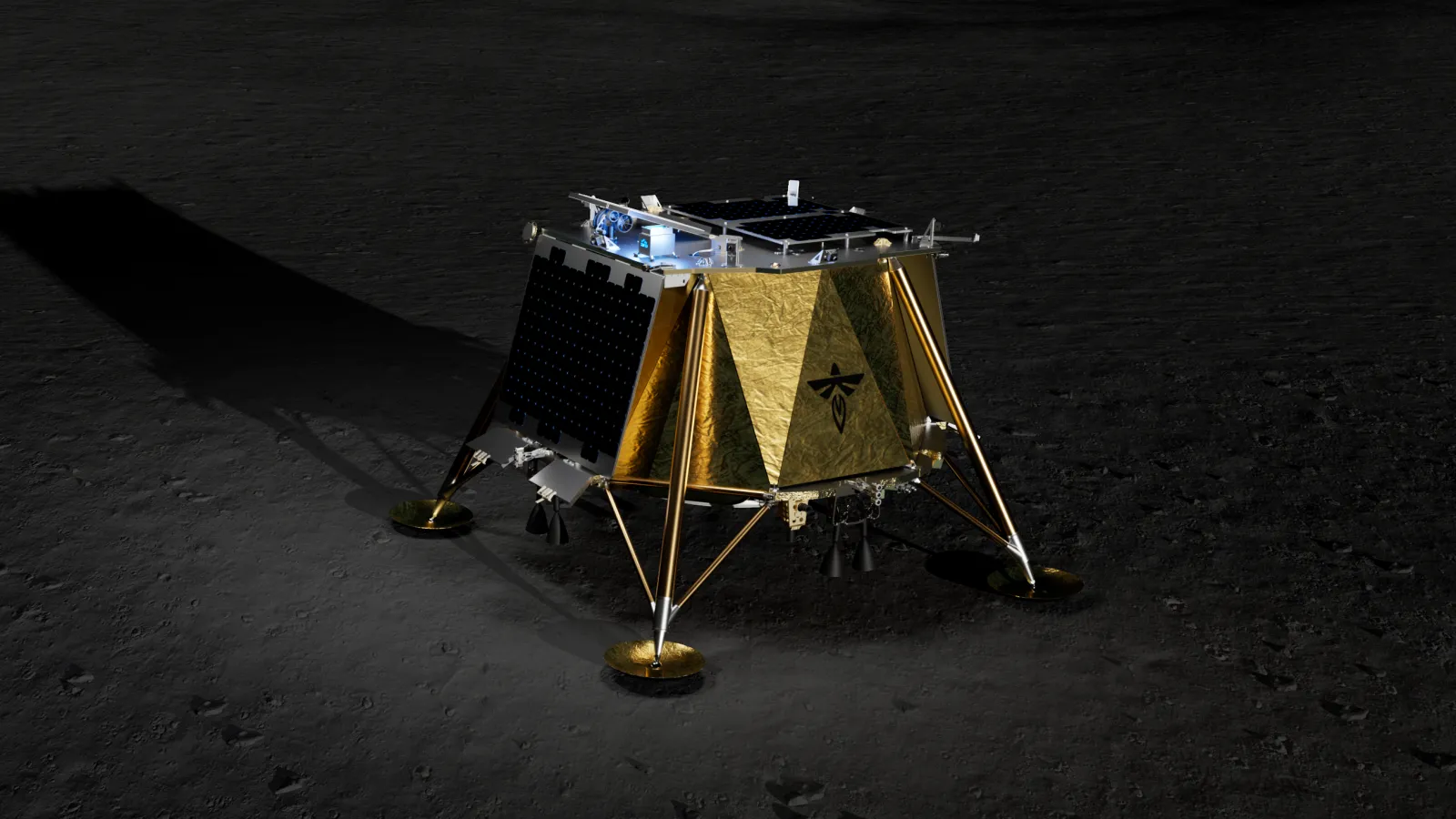
Firefly Aerospace has signed a commercial payload agreement with Zeno Power Systems to carry a radioisotope heater unit (RHU) to the Moon aboard one of its Blue Ghost landers, targeting launch no earlier than 2028. The mission will be conducted under NASA's Commercial Lunar Payload Services (CLPS) initiative, which contracts private companies to deliver scientific and technology payloads to the lunar surface.
Zeno's "Survive-the-Night Package" centres on a 5-watt thermal americium-241 RHU, a compact device that generates heat through the natural radioactive decay of its fuel, requiring no solar input. The payload will also carry its own structural, communications, power, and thermal-management subsystems. After Blue Ghost lands and operates NASA CLPS instruments on solar power throughout the approximately 14-Earth-day lunar daytime, Zeno's unit will activate at lunar sunset and transmit operational data back to Earth through the ensuing fortnight of darkness, when surface temperatures can fall below minus 280 degrees Fahrenheit.
The technology gap
Surviving the lunar night is one of the primary engineering obstacles to long-duration surface operations on the Moon. Solar panels and conventional batteries cannot sustain spacecraft through 14 consecutive days without sunlight, and the thermal shock between the lunar day and night is severe: Firefly's first Blue Ghost mission, which achieved the first successful commercial Moon landing in 2025, recorded temperatures above 230°F during the day and below minus 275°F at night.
Radioisotope power systems (RPS) are not new technology: NASA has used them on deep-space probes and Mars rovers for decades. What is new is the push to qualify smaller, commercially procured RPS units for a lunar economy that is scaling rapidly. Zeno Power is among a small group of startups seeking to commercialise this technology alongside the government programmes that have historically dominated the field. Americium-241, the isotope Zeno uses, is attracting interest as an alternative to the plutonium-238 that powers NASA heritage systems, partly because of concerns about plutonium supply security.
Market and policy context
NASA's Artemis programme and its associated Moon Base ambitions are the primary demand signal. The agency has publicly identified radioisotope power as a required technology for sustained lunar surface operations, particularly for assets located in permanently shadowed regions near the poles where solar power is unavailable. The CLPS model, under which Firefly operates, is designed to accelerate commercial capability by giving private landers NASA manifest slots in exchange for delivering agency payloads at fixed contract prices.
For Firefly, now listed on Nasdaq under the ticker FLY, the Zeno agreement adds a commercially contracted demonstration payload to a mission cadence that already includes forthcoming flights to the Moon's far side and the Gruithuisen Domes. For Zeno, a successful night-survival demonstration would provide flight-heritage data that could underpin bids on future government and commercial contracts, at a point when the company says it is building out production capacity for subsequent missions.
Tyler Bernstein, chief executive and co-founder of Zeno Power, said the demonstration answers a recognised technology gap: "NASA's Moon Base Program has identified the need for technologies such as radioisotope power systems to support future lunar exploration, and Zeno is proud to answer that call."
The key milestones investors and programme managers will watch are a confirmed launch date (currently set at no earlier than 2028), successful lunar night activation, and the data return that would constitute a formal technology demonstration. Neither company disclosed the financial terms of the payload agreement.