
Founder Group wins 1.78 MW rooftop solar contract for Kedah shrimp farm

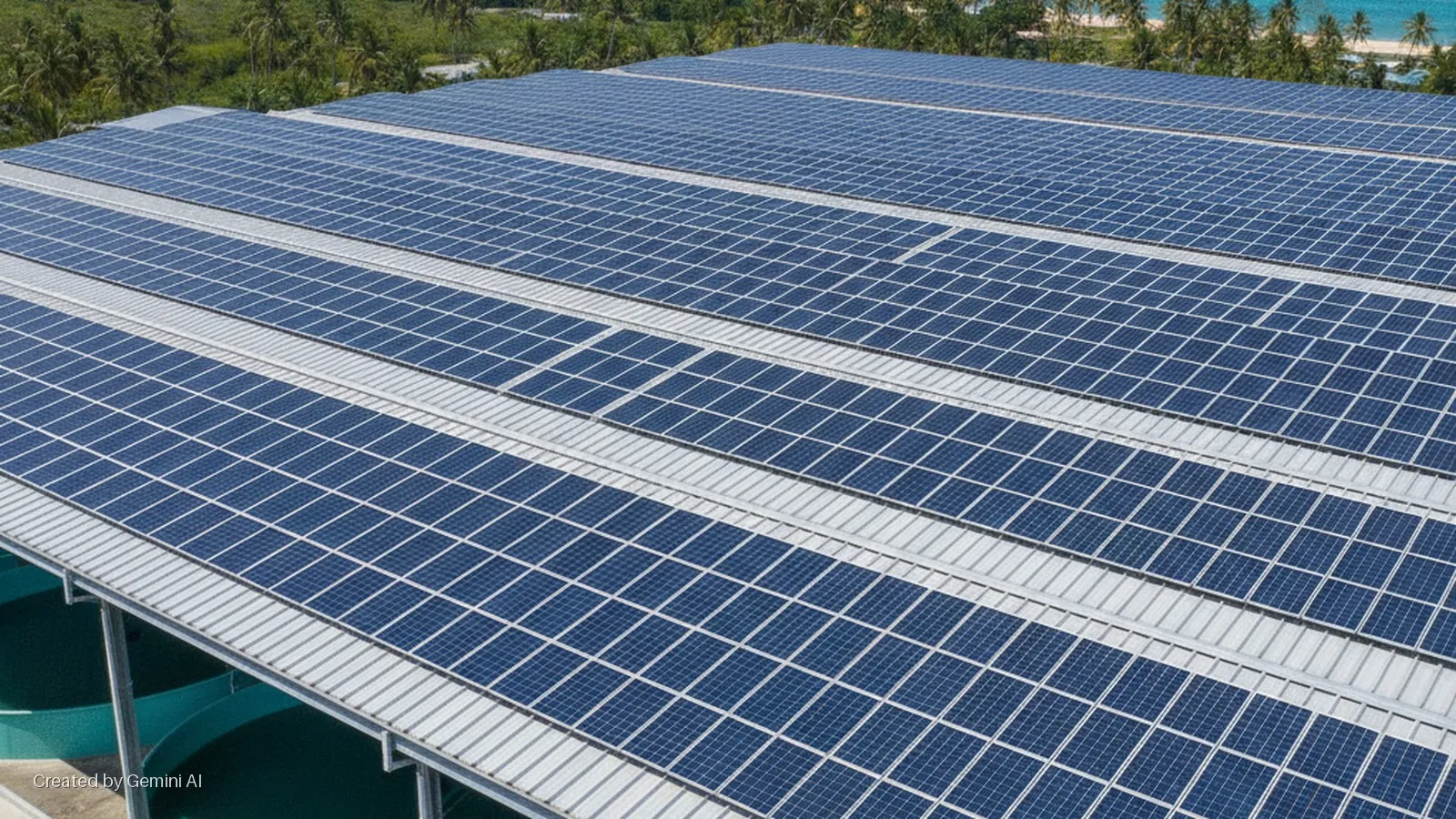
Founder Group Limited, the NASDAQ-listed Malaysian solar developer (ticker: FGL), has signed a turn-key engineering, procurement, construction and commissioning (EPCC) contract to build a 1.78 MW-peak rooftop photovoltaic system at a shrimp farming and processing facility in Ayer Hitam, Kedah. The contract is valued at approximately RM5.58 million (US$1.37 million) and has a 25-year operational design life.
The contract is the company's second in Malaysia's aquaculture sector, following an earlier project at a shrimp farm in Terengganu. The Kedah site is described as the first to combine an integrated shrimp farm with a processing plant. The client was not named. No power purchase agreement price, revenue-share arrangement, or ongoing operations and maintenance contract value was disclosed.
Market context
Aquaculture is an unusually electricity-intensive food-production category. Continuous pond aeration, water-quality management, chilling, and processing lines run around the clock, making electricity one of the largest controllable costs after animal feed. The case for on-site distributed solar is therefore stronger than in many other commercial and industrial (C&I) segments, because the load profile is both high and predictable.
Southeast Asia's commercial aquaculture market is expanding rapidly. Malaysia's Department of Fisheries reported domestic aquaculture output of more than 500,000 metric tonnes, valued at roughly US$1 billion, in 2023. Under the government's National Agro-Food Policy 2.0, aquaculture is targeted to represent 40% of total fisheries production by 2030, implying significant incremental power demand across coastal and rural sites. Regional data cited in the release suggests rooftop solar can reduce aquaculture electricity costs by up to 72%, though that figure originated from studies in Brunei and Taiwan and has not been independently verified for Malaysia's cost and tariff structure.
Policy backdrop
Malaysia's solar market is being reshaped by several overlapping policy mechanisms. The National Energy Transition Roadmap targets 70% renewable energy capacity by 2050. The Corporate Renewable Energy Supply Scheme (CRESS) and the Solar Accelerated Transition Action Programme (Solar ATAP) are expanding access for commercial buyers, while a sixth Large-Scale Solar (LSS6) tender round is expected to attract between RM13 billion and RM15 billion (roughly US$3.2 billion to US$3.7 billion) in investment. Utility tariff adjustments under the current Regulatory Period 4 and automatic fuel-cost pass-through mechanisms are pushing energy-intensive businesses toward on-site generation to reduce exposure to grid price volatility.
Founder Group's scope on the Kedah contract covers structural assessments, grid connection coordination with national utility Tenaga Nasional Berhad, and compliance with FM Global engineering standards. The company also offers an artificial-intelligence-driven operations and maintenance platform that uses automated diagnostics and drone-assisted thermal inspections, though the contract terms for any long-term O&M arrangement were not disclosed.
Chief executive Lee Seng Chi said the second aquaculture contract demonstrates that the company's model is "repeatable and on demand across this sector." The comment is consistent with a strategy of building a pipeline of small-to-mid-scale C&I solar projects within specific high-energy-intensity verticals, rather than competing on the large-scale utility tenders that dominate Malaysian solar by installed capacity.
For investors, the key near-term signal will be whether Founder Group can convert its two aquaculture references into a material pipeline across Malaysia's estimated 4,000-plus commercial fish and shrimp farms. At the current contract size, volume is the business model.