
LEAP 2026 opens with 14 gigawatts of ambition and no power deal

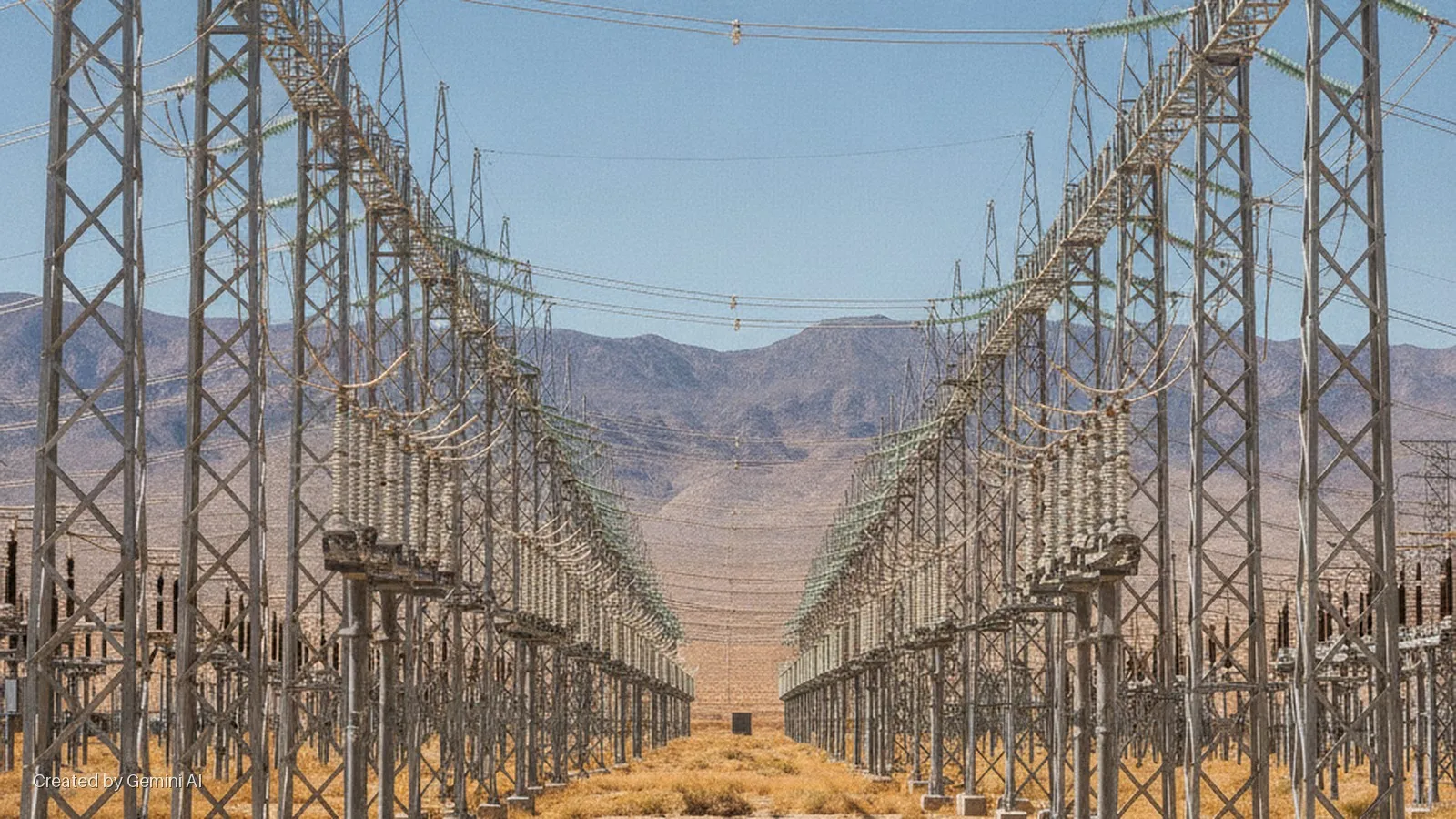
LEAP's fifth edition opened this morning in Malham, north of Riyadh, and the energy question sitting underneath it is larger than anything on the agenda. Saudi Arabia has spent two years announcing artificial intelligence capacity at a scale that only makes sense if the electricity arrives. As the doors opened, no clean energy, generation or grid announcement had been attached to the show.
That absence is the story for anyone financing the transition, because the compute numbers have run well ahead of the power numbers and the gap has not been closed in public.
The arithmetic
HUMAIN, the state-owned artificial intelligence company launched in May 2025, has broken ground on twin 100 MW campuses in Riyadh and Dammam. Chief executive Tareq Amin, who speaks on the main stage this week, has said the company will build 1.9 gigawatts of data centre capacity by 2030. Reporting on the company's land position describes 211 plots with access to 14 gigawatts of power capacity.
Access is doing a great deal of work in that sentence. A land bank with access to 14 gigawatts is not the same as 14 gigawatts of contracted supply, and the distinction is where the money is. Interconnection queues, transmission build, generation procurement and the offtake structures that underwrite all three are the actual constraints, and none of them has been detailed publicly for the Saudi AI programme.
Nvidia is supplying chips for a 500 MW build-out with a first tranche of 18,000 Blackwell parts, and AMD has a $10bn collaboration with HUMAIN. Those are silicon commitments. Silicon is not the bottleneck. In every established data centre market, from Northern Virginia to Dublin, the binding constraint has been power delivery, and developers have moved to secondary markets precisely because utility capacity was available there. Saudi Arabia's proposition is that it can supply both land and power at hyperscale speed. That proposition has not yet been tested by a published power purchase agreement.
What is on the agenda
A Climate Tech track runs through the programme, covering renewable energy, smart grids, energy storage, the energy transition and the integration of artificial intelligence and connected devices into energy systems. It is a conference track rather than a deal venue, and no session has produced an announcement as of this morning.
Beyond it, the clean energy content is thin. There is no dedicated energy pavilion of the sort the sector would recognise from ADIPEC or Intersolar, no named utility partnership, and no generation developer among the headline participants. The Saudi corporate exhibitors on the floor are weighted towards connectivity and digital government: stc Group, Elm, Sami Advanced Electronics. Red Sea Global is present with its Nucleus intelligent operations centre, which is the closest thing on the floor to a sustainability-led operator, though the demonstration is an operations platform rather than an energy asset.
Why the gap matters commercially
Two reasons, both practical.
The first is that AI data centre load is unusually inflexible. Training clusters draw close to nameplate for sustained periods, which is a poor match for intermittent renewable generation without either substantial storage or firm backup. A 1.9 gigawatt programme built on solar in a country with excellent irradiance still needs a long-duration answer, and nobody has published one.
The second is disclosure. Facilities at these densities attract scrutiny on energy and water use, and desert cooling is water-intensive unless the design specifically avoids it. Buyers of Saudi compute capacity, particularly European and North American enterprises with their own reporting obligations, will eventually need to know the carbon intensity of what they are renting. That question has not been asked loudly at LEAP so far, and it is the one most likely to arrive from outside the region.
What to watch this week
The Ministry of Media signalled ahead of the opening that large projects involving Amazon and Nvidia would be announced today, without disclosing values or structures. AWS already carries a $5.3bn commitment to Saudi data centres announced at LEAP 2024, part of a $10bn combined total across several firms, and has since added a separate AI Zone partnership with HUMAIN reported at more than $5bn. If any of today's announcements carries a generation, storage or grid component, it will be the first hard clean energy datapoint of the show and the most useful one for anyone pricing the transition here.
Failing that, the number to wait for is the opening-day investment total, which has landed on day one in every previous edition and had not been published at the time of writing. Last year's was $14.9bn. How much of this year's is power rather than silicon is the figure worth extracting.