
ABB and Nüvü supply camera electronics for NASA Roman Telescope

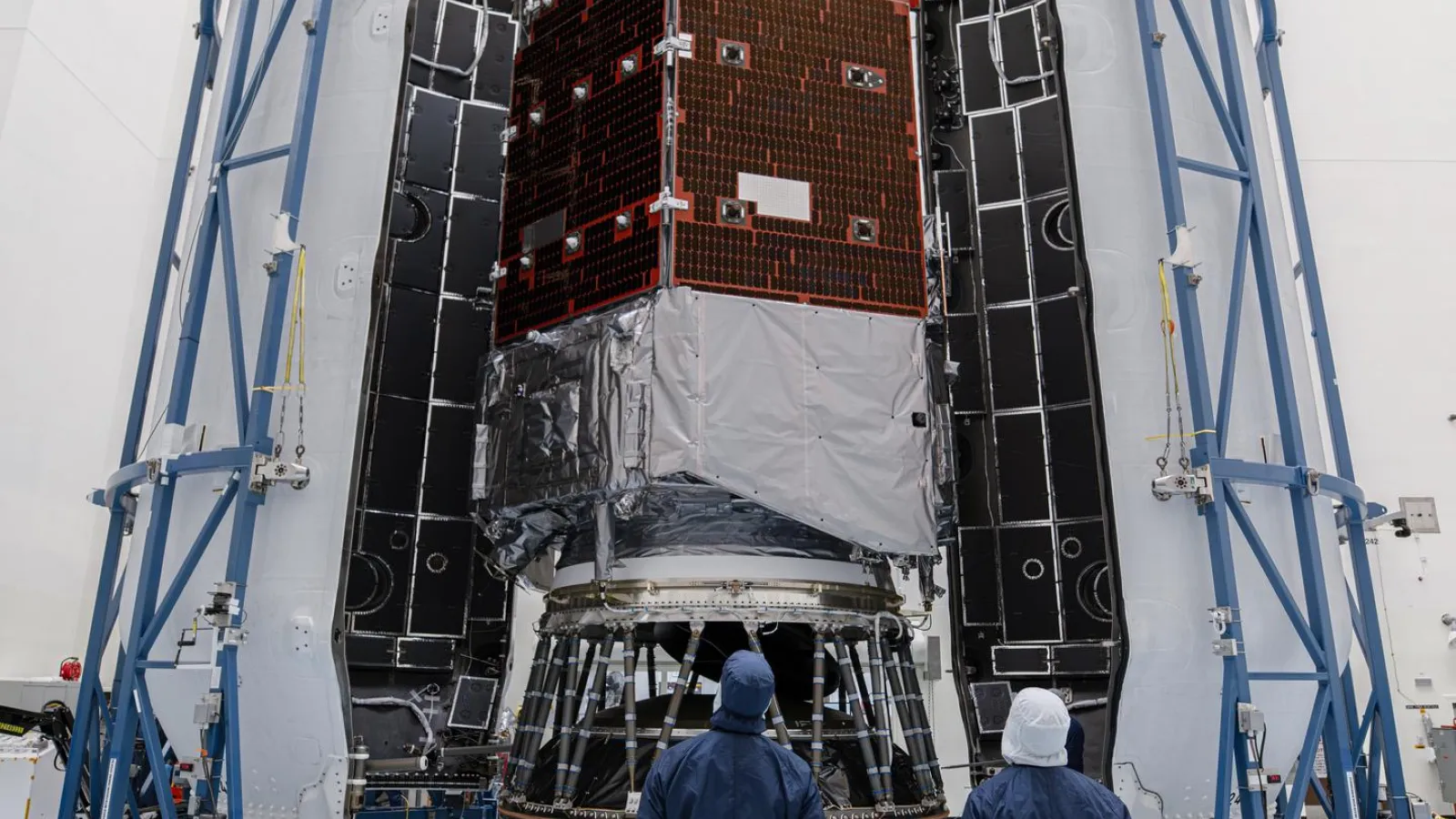
ABB and Montréal-based Nüvü Camēras have supplied the ultra-sensitive camera readout electronics at the heart of NASA's Nancy Grace Roman Space Telescope, launched on 30 August 2026. The cameras form part of the Roman Coronagraph Instrument, a technology-demonstration payload designed to image planets orbiting distant stars by suppressing the overwhelming glare of their host stars.
The Roman Coronagraph is reported by NASA to be between 100 and 1,000 times more capable for direct exoplanet imaging than existing space-based coronagraphs. ABB engineered the readout system into a unit no larger than a shoebox, using space-qualified components rated to survive deep-space radiation and cryogenic operating temperatures. NASA's Jet Propulsion Laboratory awarded ABB the contract in 2020; the Canadian Space Agency co-funded the underlying technology development.
The instrument and its engineering
Because exoplanets reflect only a tiny fraction of the starlight that falls on them, detecting them directly requires optics capable of suppressing the parent star's brightness by a factor of billions. The Roman Coronagraph channels the residual faint planetary light onto the ABB-Nüvü camera system, which must read out single-photon-level signals without introducing electronic noise that would swamp the signal.
The telescope operates at the second Lagrange point (L2), roughly four times the Earth-Moon distance, where the Earth and Sun sit in roughly the same direction as seen from the spacecraft. That geometry allows a single sunshield to block both heat sources simultaneously. Unlike the Hubble Space Telescope, Roman will be beyond reach of astronaut servicing missions, placing an unusually high reliability premium on every onboard subsystem. ABB draws on what it describes as 30 years of space-project experience and more than 140 optical systems currently in orbit, a heritage that informed its component selection and radiation-hardening approach.
Olivier Daigle, chief technology officer at Nüvü Camēras, said the collaboration would "enable one of NASA's most ambitious exoplanet imaging missions to date, paving the way to answering one of humanity's biggest questions: are we alone in the universe?"
Market and cleantech read-across
The story sits at the edge of The Cleantech Times' core beat. ABB's wider business is deeply embedded in the energy transition: its electrification and automation divisions supply grid infrastructure, industrial motor drives and emissions-monitoring instrumentation across the clean-energy value chain. Customers in the environmental-markets sector, including the satellite operators GHGSat, EarthDaily and Hydrosat, use ABB-developed optical payloads for greenhouse-gas monitoring from orbit, a directly relevant cleantech application.
The Roman mission itself is not a cleantech deployment, but the precision imaging and radiation-hardened electronics developed for it feed directly into the commercial Earth-observation segment that underpins satellite-based carbon and methane monitoring. Tighter methane attribution, in particular, is becoming a compliance requirement under evolving voluntary carbon market integrity frameworks and under regulatory proposals in the EU and the US that would mandate satellite-verified emissions reporting for large emitters.
ABB's contract with NASA's Jet Propulsion Laboratory, supported by the Canadian Space Agency, illustrates how government-funded space programmes continue to derisk photonics and detector technologies that later migrate into commercial climate-monitoring applications. For investors tracking the emissions-monitoring and environmental-data sector, the Roman mission is a useful signal about where the capability frontier is heading.