
Rebound JV targets 160,000 t/yr SAF plant at Dunkirk
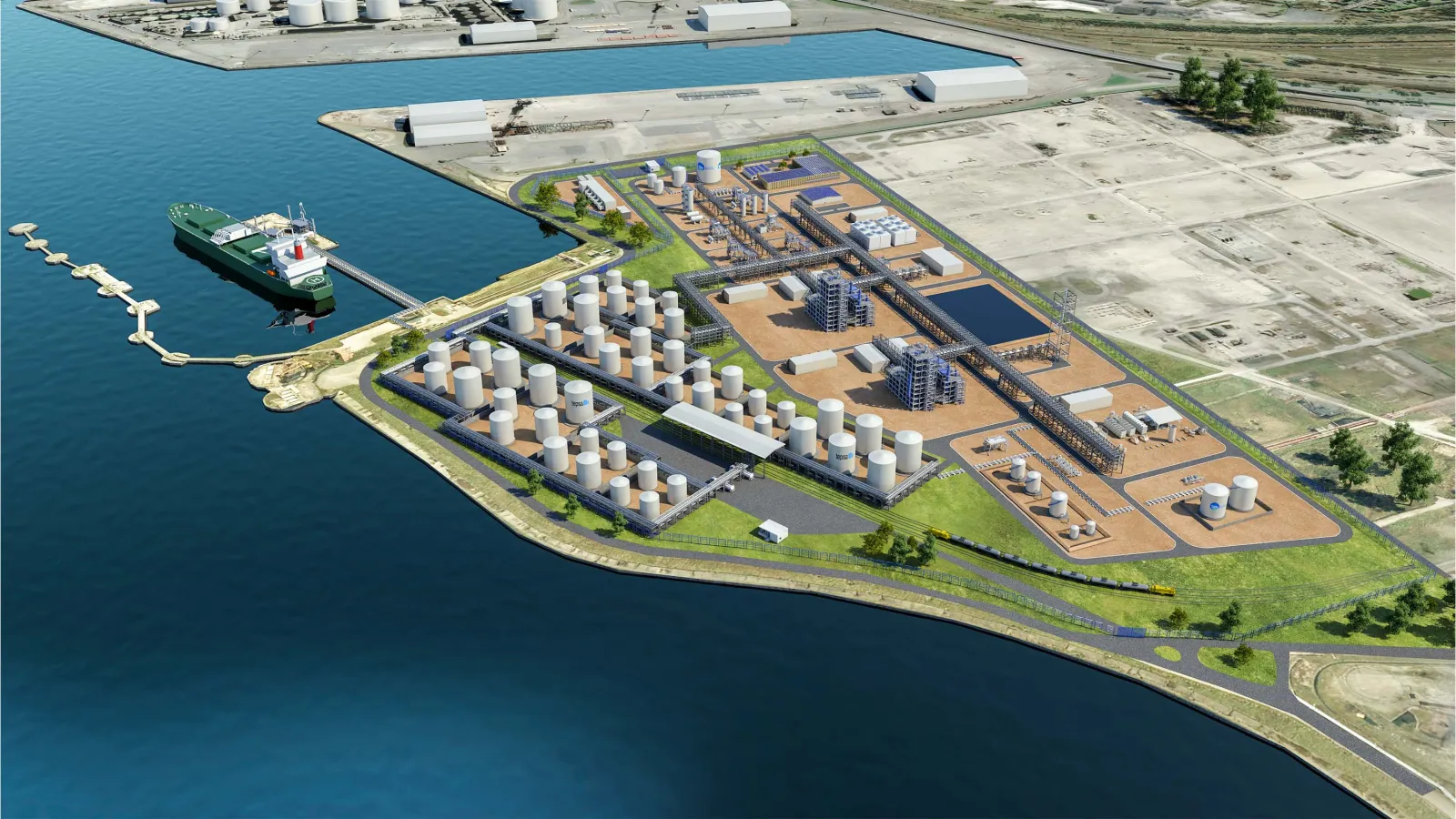
Technip Energies, Airbus, Safran and agricultural cooperative Tereos have signed an agreement to establish Rebound, a joint venture targeting a 160,000 tonne-per-year sustainable aviation fuel (SAF) production facility at the Port of Dunkirk in northern France. The four partners have committed to fund a development phase — covering engineering studies and all activities needed before a final investment decision (FID) can be taken — with the JV itself expected to be formalised in the second half of 2026.
The project will use the Alcohol-to-Jet (AtJ) pathway: advanced ethanol derived from agricultural and forestry residues is chemically converted into a drop-in aviation fuel compatible with existing engines and infrastructure. Tereos, one of Europe's largest ethanol producers, will supply and source the feedstock. Technip Energies acts as lead developer and engineering contractor. Airbus and Safran participate as industrial partners and potential SAF offtakers, though no contracted offtake volumes or prices have yet been disclosed.
The deal
The Port of Dunkirk has already awarded Technip Energies an industrial site, which the partners say will offer logistical advantages for feedstock delivery and product export, alongside a streamlined permitting process. The stage-gated development roadmap includes technology licensor selection, pre-FEED and FEED (front-end engineering design) activities, permitting, finalisation of feedstock supply and SAF offtake agreements, and project financing ahead of construction. No target FID date or project capital cost was provided in the announcement.
Benjamin Lechuga, chief strategy and sustainability officer of Technip Energies, said the AtJ pathway "offers a credible, scalable route" to decarbonise aviation, describing Rebound as consistent with the company's strategy to capture value through adjacent energy-transition business models. At 160,000 tonnes per year, Rebound would rank among the largest AtJ facilities announced in Europe, though the developers have not confirmed an independent comparison.
Market context
SAF is produced through multiple competing pathways — Hydroprocessed Esters and Fatty Acids (HEFA, currently the dominant route), Power-to-Liquid (PtL), and AtJ. HEFA is constrained by limited sustainable feedstock supply; PtL is energy-intensive and largely pre-commercial. AtJ is attracting growing developer interest because agricultural and forestry residues are more abundant than used cooking oil and the chemistry is closer to established industrial ethanol processing. Several projects across Europe and the United States are at various stages of development, though the vast majority have not yet reached FID.
Demand-side pull is hardening under EU regulation. The ReFuelEU Aviation mandate — part of the broader Fit for 55 package — requires SAF blending of 2% from 2025, rising to 6% by 2030 and 70% by 2050. The regulation also contains a sub-mandate specifically for synthetic fuels. The partners cite an eightfold increase in SAF demand between 2030 and 2050 implied by those targets, a projection that supports the investment case but remains contingent on regulatory durability.
Policy and financing path
Project financing for large-scale SAF plants in Europe typically involves a combination of infrastructure debt, EU Innovation Fund grants, and corporate equity from industrial partners. France's industrial-sovereignty framing — reinforced by the Dunkirk site's strategic logistics position — may support access to French state-backed financing instruments, though no public-sector funding has been announced for Rebound.
Investors tracking the SAF value chain will look for Rebound to confirm: the identity of the technology licensor, a pre-FEED timeline, any public-funding commitments, and — critically — signed offtake agreements that establish a contracted price. Until those milestones are reached, Rebound remains a well-credentialled development-phase project rather than a financed construction commitment.