
Eos Energy starts production at second zinc-battery facility
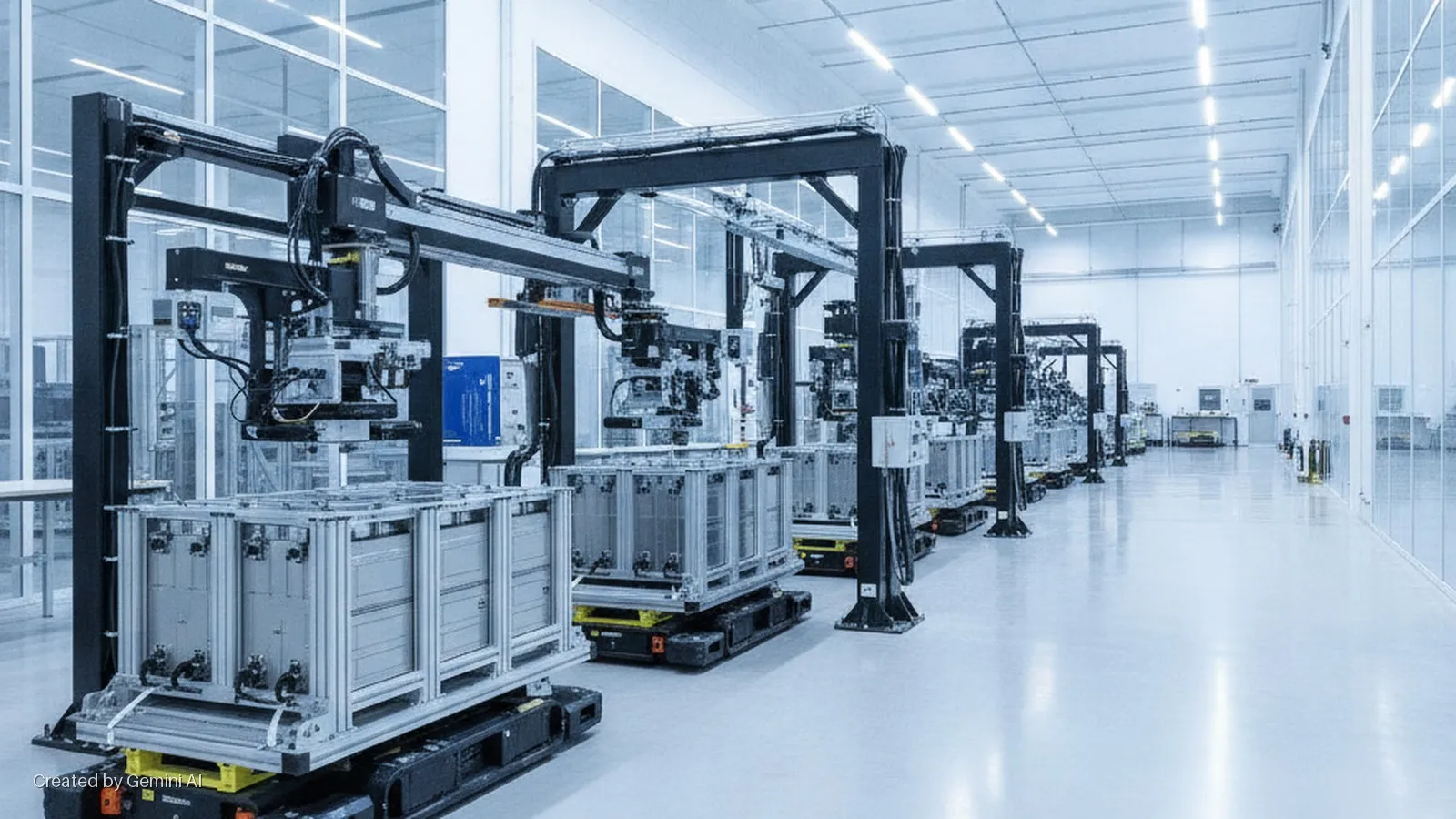
Eos Energy Enterprises has begun commercial production at its second manufacturing facility in Marshall Township, Pennsylvania, following successful site acceptance testing for what the company calls Battery Line 2. The NASDAQ-listed developer of zinc-based long-duration energy storage (LDES) systems says the milestone advances its stated goal of reaching 4 GWh of annual production capacity before the end of 2026.
The company said Line 1, its first production line, surpassed its entire 2025 output in just 164 days of this year. Eos says the experience gained from Line 1 was used directly in the design of the Thorn Hill facility, resulting in a layout that the company reports reduces raw-material travel distance by 86% and shortens the overall production line by 40% compared with its predecessor. The facility incorporates single-piece flow architecture and automated pick-and-place gantry systems. Subassemblies are expected to come online in the early third quarter of 2026, with full production targeted for the fourth quarter.
The demand picture
Eos cited several demand signals it says Line 2 was built to address. In the United States, Frontier Power USA (FPUSA) holds a 2 GWh capacity reservation agreement with Eos and, in May 2026, acquired a 480 MWh battery project portfolio in Texas from Bimergen Energy. FPUSA subsequently signed a strategic framework agreement with Stella Energy Solutions to advance a further 2 GWh pipeline built around Eos technology. In the United Kingdom, Frontier Power Energy Holding has acquired development rights to the Ayr and Busby projects in Scotland, which are expected to utilise approximately 2.8 GWh of Eos Z3 Indensity systems under a framework agreement announced in April 2025. Both the UK and US opportunities remain subject to project-specific agreements and development milestones before they convert to firm orders.
Chief Operating Officer John Mahaz said the second line demonstrates the company's ability to replicate and improve its manufacturing system. "The result is a more efficient manufacturing environment with better flow and a stronger foundation for future expansion," he said.
Market context
LDES, broadly defined as storage systems that can discharge for four hours or more, is a key enabler of higher renewable penetration on electricity grids, smoothing the intermittency of solar and wind generation. Zinc-based chemistries compete with vanadium flow batteries, iron-air systems and lithium-iron-phosphate installations for grid-scale applications. Each chemistry involves different trade-offs across round-trip efficiency, cycle life, raw-material availability and fire risk. Eos positions its zinc-based Znyth technology as non-flammable and built from relatively abundant materials, differentiating it from lithium-ion systems.
The broader LDES market is at an inflection point. Several developers have struggled to scale manufacturing economically, and investors are increasingly focused on which companies can demonstrate a replicable factory model rather than a one-off pilot. The commissioning of a second automated production line is a meaningful operational data point for that question, even if capacity targets remain forward-looking.
Policy and financing backdrop
US LDES development has been shaped by the Inflation Reduction Act's investment tax credit and manufacturing credits, and Eos's own filings cite the importance of tax credit availability to its customers' project economics. The company has also referenced a Department of Energy loan facility as a potential future funding source, though no draw has been confirmed. Eos's credit agreement with Cerberus Capital is flagged in its own forward-looking disclosures as carrying refinancing and dilution risk, which investors will monitor alongside the manufacturing ramp.
Full production from Line 2 in Q4 2026, combined with the conversion of the FPUSA and Frontier Power UK pipeline into signed project agreements, will be the clearest near-term test of whether Eos can translate its expanded factory footprint into contracted revenue.