
Jackery launches HomePower 1000 Plus V2 in Canada

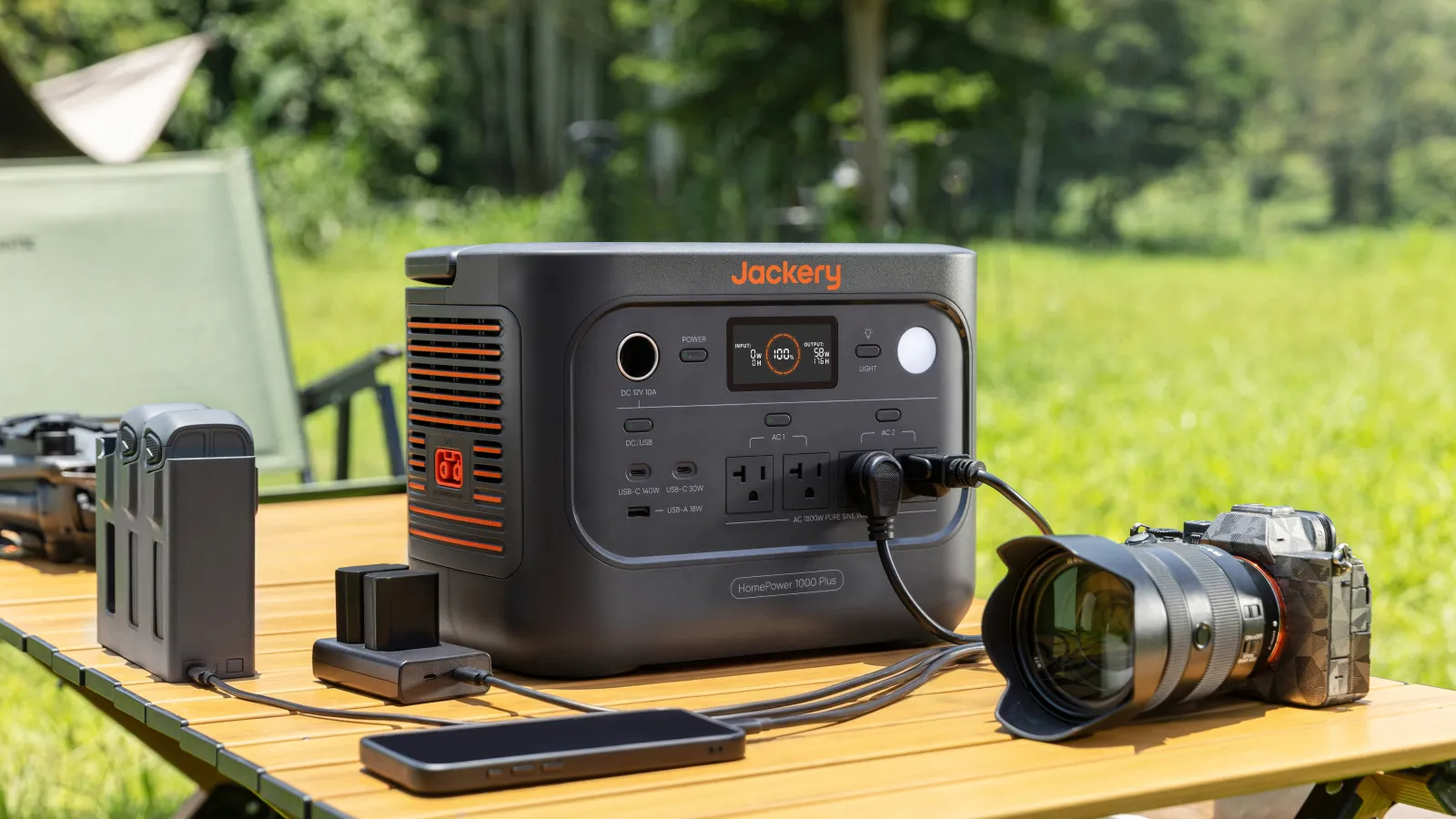
Jackery has launched the HomePower 1000 Plus V2 in Canada, a modular lithium iron phosphate (LFP) power station aimed at residential backup, outdoor worksites and off-grid recreation. The unit starts at a 1,024 Wh base capacity and can scale to 11 kWh by adding the company's 2 kWh expansion batteries, giving households a route to incremental storage without the permitting and installation costs of a fixed home-battery system.
The HomePower 1000 Plus V2 is available for pre-order from 27 August at CAD $829, with general sale beginning 8 September through Jackery's Canadian website and Amazon. It carries a five-year manufacturer warranty and is the third entry in Jackery's Canadian HomePower line, following the HomePower 1000 V2 and HomePower 2000 Plus V2 releases earlier in 2026.
The product
The unit delivers a sustained 1,800W output across four pure sine-wave AC outlets, with a 3,600W surge rating, which Jackery says covers roughly 80 per cent of standard household appliances and heavy-duty tools. An integrated uninterruptible power supply (UPS) switches connected devices to battery within ten milliseconds of a grid interruption, protecting desktop computers, routers and refrigeration. A time-of-use (TOU) scheduling function lets users automate off-peak charging and draw down stored power during peak-tariff windows.
Cold-climate performance is a stated focus. The unit accepts a charge at temperatures down to -10 degrees Celsius, addressing a known limitation of many consumer battery systems in Canadian winters. The LFP cells are supplied by EVE Energy and are rated for 6,000 charge cycles before dropping to 70 per cent capacity, which Jackery equates to roughly 16 years of daily use. Solar input via dual DC ports is rated at up to 400W, and AC fast-charging is reported to reach 80 per cent in 36 minutes.
Market context
The HomePower 1000 Plus V2 sits in the consumer and prosumer end of the distributed energy storage market, well below the installed-capacity and capital scale that The Cleantech Times typically covers. It is not a grid-scale or utility-facing product. Jackery competes in this segment with Anker, EcoFlow and Goal Zero, all of which sell modular LFP power stations into the same Canadian emergency-preparedness and outdoor-recreation market.
The broader residential battery-storage category is, however, a genuine energy-transition story at scale. Fixed home-battery systems such as Tesla Powerwall and Enphase IQ Battery are integrating with smart-inverter and demand-response programmes, and several Canadian utilities are piloting virtual power plant (VPP) aggregation of behind-the-meter storage. Portable consumer units like this product sit at the low end of that continuum: they provide individual resilience but are not, at present, grid-interactive assets.
Canada's extreme-weather preparedness narrative, cited by Jackery in reference to 2026 heatwaves, windstorms and wildfires, is a real demand driver. Insurers and provincial emergency-management agencies have been encouraging households to hold backup power capacity as grid-disruption frequency increases. Whether consumer power stations of this scale constitute a meaningful contribution to grid resilience, as distinct from individual convenience, remains an open question in policy circles.
For investors tracking the residential storage market, the relevant signal here is continued strong retail demand at the sub-10 kWh consumer tier, where price points below CAD $1,000 are proving accessible. The strategic question is whether products in this category remain stand-alone consumer goods or whether aggregation software turns them into addressable grid assets over the coming regulatory cycle.