
TWAICE deploys BESS analytics at 282 MWh Alfeld storage site
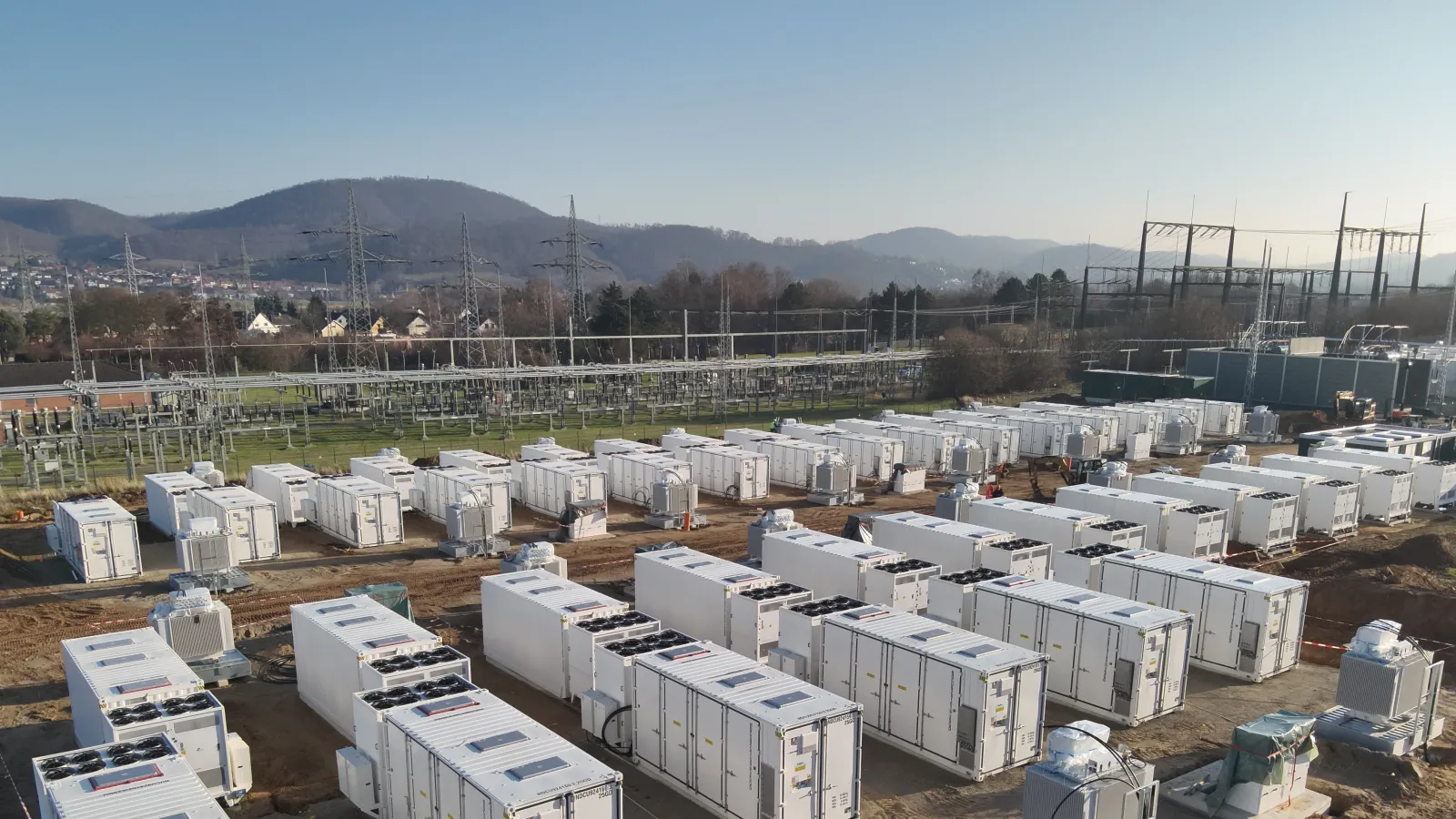
TWAICE, a Munich-founded analytics software company, has been contracted to provide its battery energy storage system (BESS) analytics platform to BayWa r.e., the operations and maintenance (O&M) provider for the 137.5 MW / 282 MWh Alfeld project in Lower Saxony, Germany. The storage site is owned by Danish investment fund Scale Fund and represents one of the larger grid-scale battery installations currently operating in the country.
TWAICE's platform is described as vendor-agnostic, normalising performance data across battery hardware from different manufacturers and translating it into operational recommendations. Specific functions cited include early identification of underperformance, temperature trend monitoring, and quantification of recoverable energy — information that the company says allows O&M teams to move from reactive fault-response to pre-emptive management. Financial terms of the contract were not disclosed.
The deal
Simon Slapka, Managing Director of BayWa r.e. Data Services GmbH, said that managing a growing storage fleet means "dealing with more assets, more alarms, and more data sources than ever before", and that the primary challenge is identifying which signals warrant action before they become service events.
Stephan Rohr, chief executive of TWAICE, framed the deployment as emblematic of a broader operational gap in the German market. "As gigawatt-hours of new storage come online in Germany each year, the gap between how batteries are monitored and how they should be managed is widening," he said. "Independent analytics closes that gap."
BayWa r.e. is a subsidiary of the BayWa AG agricultural and energy conglomerate, co-owned by infrastructure investor Energy Infrastructure Partners. The company reports having brought more than 6 GW of renewable energy online globally across wind, solar and storage.
Market context
Germany's grid-scale battery storage market has expanded rapidly as the country phases out nuclear capacity and absorbs increasing volumes of intermittent wind and solar generation. BESS installations are used primarily for frequency regulation and wholesale energy arbitrage, and the pipeline of new projects has drawn both domestic and international capital.
The operational analytics niche TWAICE occupies sits between the battery hardware manufacturers — who provide proprietary monitoring tools — and the independent O&M firms that manage multi-vendor fleets. As storage portfolios grow in size and asset diversity, vendor-agnostic software that aggregates and contextualises performance data is gaining traction with institutional asset owners who require consistent reporting across mixed fleets.
TWAICE, founded in 2018, also serves EV original-equipment manufacturers (OEMs) and battery cell companies through a separate business unit. The company has not disclosed its funding history or revenue figures in this announcement, though the dual market focus — grid-scale BESS and mobility — positions it at the intersection of two of the faster-growing segments of European battery deployment.
Policy path
Germany's storage build-out is partly a function of the country's Energiewende policy framework and its obligations under the EU's revised Renewable Energy Directive (RED III). The European Commission's push to accelerate storage permitting and integrate BESS into capacity markets is adding regulatory tailwind, while the EU's Net-Zero Industry Act aims to develop domestic battery manufacturing capacity — a factor that could reshape both the hardware supply chain and the software layer above it.
For asset owners such as Scale Fund, the long-term revenue case for Alfeld and comparable projects will depend on evolving German and European market rules for balancing services and intraday energy trading — making operational performance, and the analytics that underpin it, a direct input to project returns.