
UgoWork deploys lithium-ion fleet system at Canac Drummondville DC

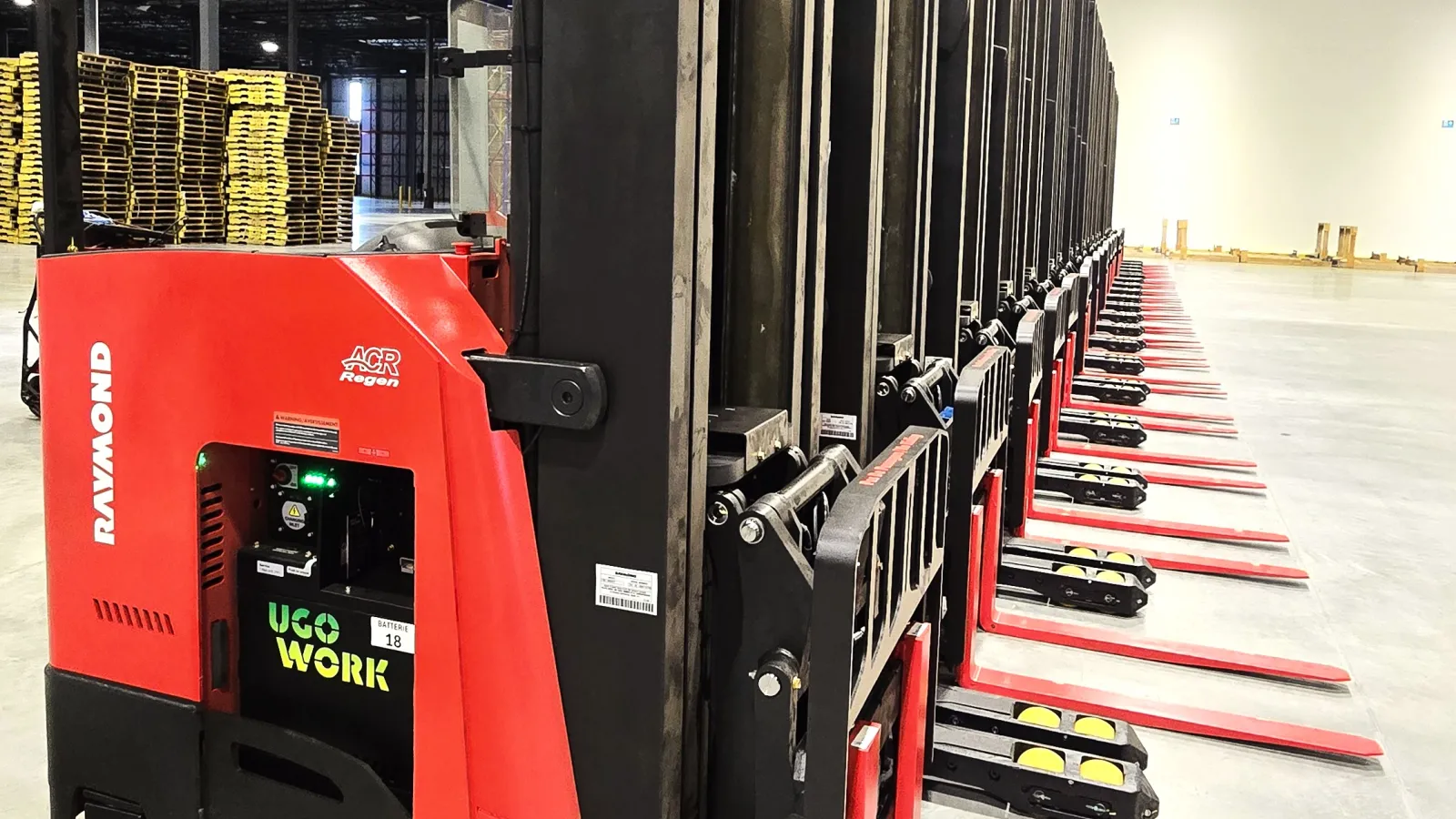
UgoWork, a Quebec City-based lithium-ion energy-solutions provider, has deployed its battery, charger and software platform at Canac's expanded distribution centre in Drummondville, Quebec. The hardware-retail chain integrated UgoWork's system from the design stage of its new 625,000 sq ft wing, rather than retrofitting existing infrastructure, making energy management part of the facility's core build-out decision.
The deployment covers reach trucks equipped with UgoWork lithium-ion batteries, paired with UgoPilot, the company's cloud-based battery and energy management platform. Canac's fleet and delivery director, Raphaële Dumont, said a short on-site trial run and the supplier's data transparency were the deciding factors. No contract value, fleet size, or energy-capacity specification was disclosed in the announcement.
The deal
UgoWork describes the Drummondville contract as the opening of a multi-year relationship with Canac, which operates 37 branches across Quebec and employs close to 5,700 people at peak. The company says the platform shifts fleet oversight from reactive maintenance to continuous monitoring: rather than responding to a truck going offline, operators receive real-time visibility into charge states and performance metrics through a cloud dashboard.
Canac's Dumont noted that local sourcing was a parallel consideration alongside the technology itself, citing a preference for working with a Quebec-headquartered supplier. UgoWork chief executive David Mucciacciaro said the company's aim is to make energy "a strategic advantage, not an operational burden" for warehouse operators.
Market context
Lithium-ion batteries are displacing lead-acid chemistry across the industrial material-handling sector, driven by lower total cost of ownership over a battery's life cycle, reduced maintenance requirements and compatibility with opportunity charging between shifts. The transition is most visible in distribution and logistics facilities, where throughput pressure limits the downtime available for battery swaps. Software-enabled fleet monitoring, of the kind UgoPilot represents, is an increasingly standard add-on: several North American and European suppliers now bundle telematics and state-of-charge analytics with hardware as a way of deepening customer lock-in and recurring software revenue.
The market for industrial lithium-ion solutions in North America is fragmented, with vertically integrated providers such as UgoWork competing against established forklift original-equipment manufacturers offering their own battery and charging packages, alongside battery specialists that sell into the aftermarket. Scale advantages in manufacturing and service density tend to favour the larger OEM incumbents, while smaller specialists compete on software depth and application expertise.
Emissions and policy read-across
The carbon-reduction case for lithium-ion forklifts in a grid-connected warehouse depends substantially on the emissions intensity of the local electricity supply. Quebec draws the majority of its power from hydroelectricity, giving it one of the lowest-carbon grids in North America, which strengthens the lifecycle emissions argument for electrified material handling relative to facilities powered by higher-carbon grids. Canada's federal clean-electricity regulations and provincial industrial efficiency programmes have created a supportive policy backdrop, though the Drummondville deployment does not appear to be tied to a specific incentive or subsidy mechanism.
For UgoWork, the Canac contract adds a named retail-sector reference to a client base it says already includes large S&P 500 and Fortune 500 warehouse operators. The next milestones to watch are the commissioning timeline for the full Drummondville wing and whether Canac extends the UgoWork system to other distribution facilities as its store count grows toward the planned 38th branch in Anjou in 2027.