
ABAT hosts DOE leaders at Nevada battery recycling and lithium sites

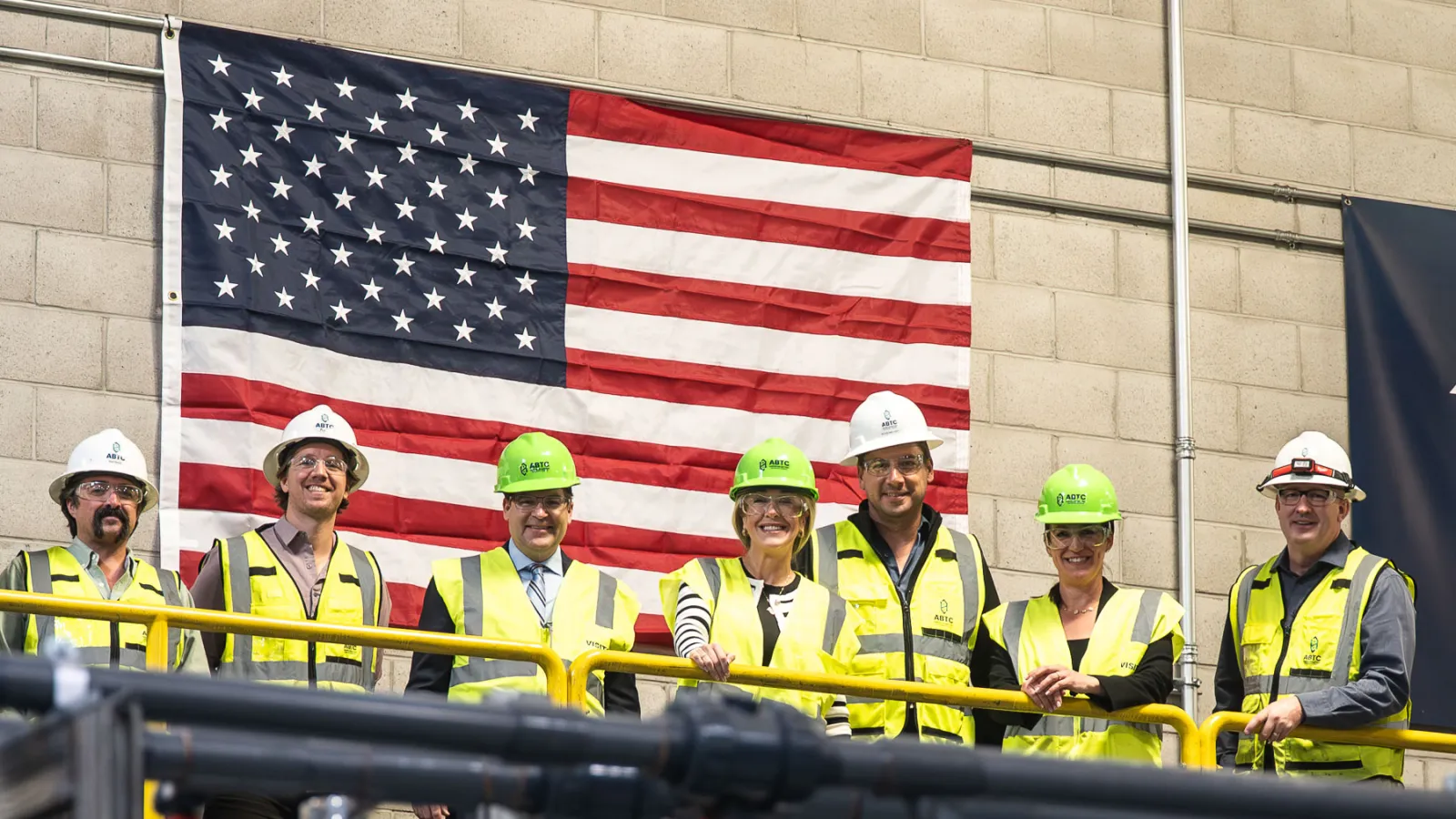
American Battery Technology Company (NASDAQ: ABAT) hosted senior officials from the US Department of Energy (DOE) and the Nevada Governor's office at its facilities near Reno, Nevada, providing a firsthand look at its commercial-scale lithium-ion battery recycling plant and a pilot operation converting Nevada claystone into battery-grade lithium hydroxide. The visit marks a public validation moment for the company's two-track strategy, though no new funding commitments or commercial milestones were announced alongside it.
The delegation included DOE Assistant Secretary Audrey Robertson and senior officials from the Office of Critical Minerals and Energy Innovation, as well as the Nevada Governor's policy adviser on natural resources. Tours covered ABTC's existing Reno recycling facility, updates on a planned second recycling plant, and a demonstration of the claystone-to-lithium-hydroxide process using material from the Tonopah Flats Lithium Project in central Nevada.
The projects
Two DOE awards underpin ABTC's expansion plans. A $150 million grant supports a second commercial-scale battery recycling facility expected to process approximately five times the throughput of the existing Reno plant, which would represent a material step up in domestic recovery of battery-grade critical minerals. A separate $57 million award backs a commercial lithium hydroxide refinery proposed to be co-located with the Tonopah Flats project, which the company describes as one of the largest known lithium resources in the United States and which holds FAST-41 Transparency Project designation to streamline federal permitting.
ABTC's pilot plant has produced battery-grade lithium hydroxide from Nevada claystone using its own internally developed process. Claystone extraction differs from the brine and hard-rock spodumene sources that currently dominate global supply; the technology remains at pilot scale, and ABTC has not disclosed a timeline or capital figure for the full commercial refinery beyond referencing the DOE award.
Chief executive Ryan Melsert said the visit demonstrated "how American innovation, strategic public-private partnership, and advanced manufacturing can work together to strengthen energy resilience." The company positions itself as the only US firm advancing both battery recycling and primary lithium production simultaneously.
Market context
Critical minerals supply chains have become a focal point of US industrial policy since the Inflation Reduction Act introduced domestic-content requirements for the EV (electric vehicle) tax credit, creating direct demand for US-sourced and US-processed lithium, nickel, cobalt and manganese. Most battery-grade lithium hydroxide consumed in North America currently comes from Australian or Chilean resources refined in China, a dependency that the DOE's critical-minerals programmes are explicitly designed to reduce.
ABTC operates in two distinct but related markets. Battery recycling, which recovers lithium, nickel and cobalt from end-of-life cells, is scaling rapidly as EV penetration grows the addressable feedstock pool; several well-funded US and European recyclers are pursuing commercial deployments. Primary lithium from novel sources such as claystone is further from commercialisation and carries higher technical and permitting risk than conventional brine or hard-rock projects.
The DOE's loan and grant programmes, including the Advanced Technology Vehicles Manufacturing loan, the Title XVII loan guarantee and direct grants through the Office of Manufacturing and Energy Supply Chains, have become central to whether capital-intensive critical-mineral projects can reach financial close in the current rate environment. ABTC's $207 million in combined awards is material for a company of its size, though the release notes a going-concern risk in its forward-looking disclosures, which investors will weigh against the progress shown to DOE visitors.
The next milestones to watch are a construction start and financial close on the second recycling facility, a final investment decision on the Tonopah Flats refinery, and any named offtake agreements for lithium hydroxide output.