
John Crane seal retrofit cuts water use 80% at German sugar plant

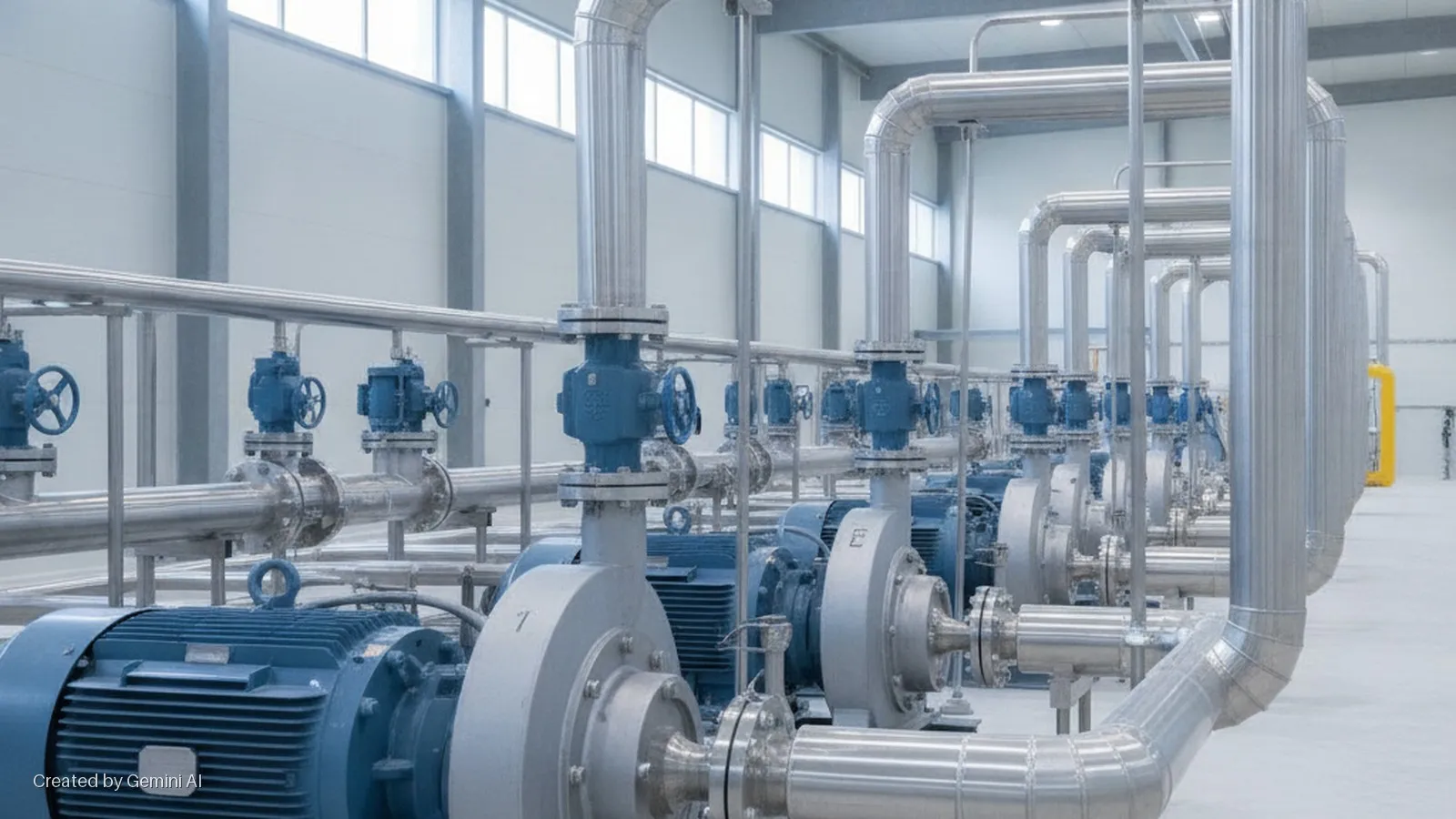
John Crane, the flow-control technology business within FTSE 100 industrial group Smiths Group, says a mechanical seal retrofit programme at an unnamed German sugar producer has cut sealing water consumption by approximately 80% across four continuously operating pumps. Over a full 180-day production campaign, the company calculates the saving exceeds 6.2 million litres of water, equivalent to more than 34,560 litres saved every 24 hours of operation.
Before the upgrade, water flow rates for seal cooling and lubrication ranged from eight to twelve litres per minute on each pump. Following conversion to John Crane's Type 587, Type 5620 and SB2 Upstream Pumping (USP) seal configurations, that figure dropped to approximately one to two litres per minute per application. The four pumps handle thin juice, thick juice and recirculation or distillation streams, operating at temperatures between 80°C and 133°C and pressures of one to four bar.
The retrofit
The previous seals, supplied by a competitor, were failing every three to four months under the combined stress of high heat, abrasive media and crystallising process fluids. The customer's stated objectives were to extend mean time between repair and reduce water consumption simultaneously, a pairing that seal suppliers increasingly pitch as a single commercial proposition rather than separate maintenance and sustainability workstreams.
John Crane engineers spent approximately one year in planning and preparation before beginning progressive pump conversions around seven years ago. The approach allowed the customer to validate performance in live production before extending the programme. According to John Crane, no seal failure has been reported on the four converted applications since 2019, and seal service life has increased from an average of three to four months to several years.
Aziz Sallie, Vice President, Commercial and Service at John Crane, said the result was "also a compelling reliability story", adding that the pumps operate in conditions "where seals had been failing every three to four months" and that the customer is "seeing measurable value in water efficiency, maintenance and long-term performance."
Market context
Industrial water efficiency is gaining traction as a procurement and compliance priority, particularly in water-stressed regions of Europe, where the EU's Industrial Emissions Directive and the Water Framework Directive are tightening reporting and reduction obligations for process manufacturers. The food and beverage sector, including sugar refining, is among the larger industrial water consumers and faces increasing regulatory and investor scrutiny over withdrawal volumes.
The retrofit-based approach John Crane describes sits at the intersection of industrial services and resource efficiency: rather than replacing capital equipment, it targets existing rotating machinery with upgraded sealing systems. Several large industrial-services groups, including SKF, Flowserve and Sulzer, compete in the same mechanical-seal and pump-services market. The broader pitch to plant operators is that seal technology improvements can deliver measurable environmental metrics without the capital cost or downtime of full equipment replacement, a proposition that fits well with industrial decarbonisation and water-stewardship commitments made under ESG frameworks.
The German sugar producer has not been named and no contract value has been disclosed. John Crane said the customer is planning further pump conversions beyond the initial four applications, which would extend the water-saving calculation. The long-term programme trajectory and any formal water-reporting framework the customer uses to account for the savings were not detailed in the release.