
PyroGenesis wins second titanium powder contract with additive OEM

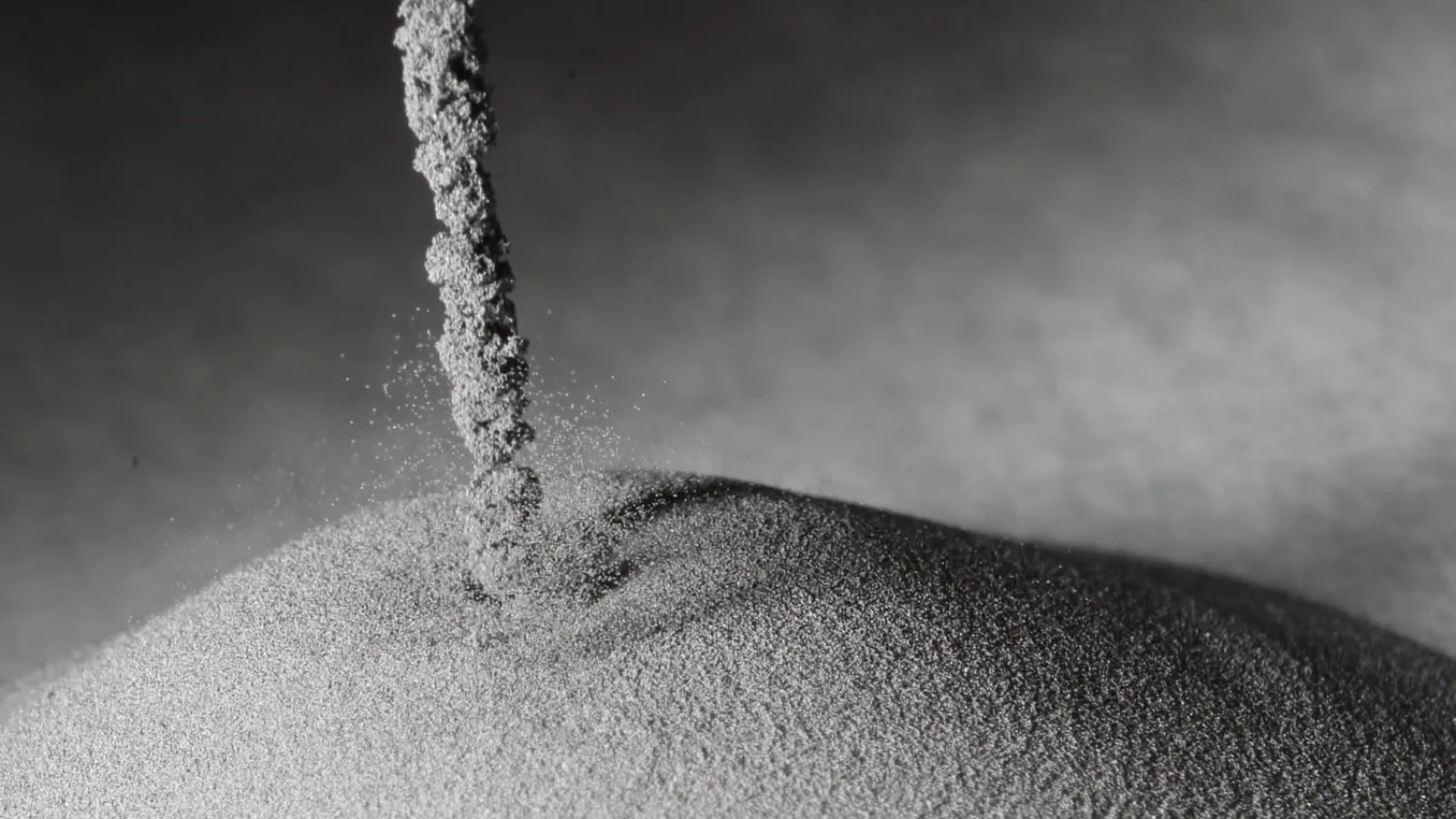
PyroGenesis has secured a second titanium powder contract worth US$73,700 (CA$102,132) with the same US-based original equipment manufacturer (OEM) it announced an initial order with just one week earlier. The TSX-listed plasma-technology company said the powder has already been produced under its NexGen plasma atomisation process and is expected to ship within days.
The order is for Ti64 "coarse cut" titanium powder with a particle size of 45 to 150 microns, intended for use in directed energy deposition (DED), an additive-manufacturing technique commonly used in the aerospace and defence sectors to print or repair large structural metal components. DED processes can accommodate parts spanning up to five metres, among the largest objects producible via metal 3D printing. The client's name and contracted volume remain confidential, the company said.
The deal
President and chief executive P. Peter Pascali said the speed of the repeat order was faster than the company had anticipated. "I believe this is particularly noteworthy as it indicates a growing demand for titanium powder at the quality and price level produced by PyroGenesis," he said, adding that repeat customers are a central pillar of a six-point commercialisation plan the company outlined in April 2026 for its Additive Manufacturing Division.
PyroGenesis describes itself as the originator of the plasma atomisation process and holds the original patent coining the term. After a period of redesign, the company re-entered the powder-production market with its NexGen system, progressing from gram-scale samples to 100-kilogram orders and a first tonne-scale order in May 2023. It produces titanium powder in three particle-size ranges: fine cut for laser powder bed fusion (LPBF), coarse cut for electron beam melting and DED, and off-cuts suited to alloy production.
Market context
The global market for titanium powder used in 3D printing is projected by third-party analysts cited by PyroGenesis to grow from US$214 million in 2023 to US$1.4 billion by 2032, a compound growth rate that reflects rising aerospace, defence and medical demand. That figure is a vendor-cited market projection and has not been independently verified by this publication.
Titanium is classified as a critical mineral by both Canada and the United States, a designation that has attracted increasing policy attention. The US government's critical-minerals list and Canada's parallel framework both create incentive environments for domestic supply-chain development, though specific production subsidies for plasma-atomised powder are not yet well-defined. For PyroGenesis, the critical-minerals framing positions its powder business within a strategically significant supply chain, particularly given rising US defence-procurement scrutiny of materials sourcing.
The broader metal-powder market for additive manufacturing is competitive, with established players including AP&C (a GE Aerospace subsidiary), Carpenter Technology and several European producers. Plasma atomisation is widely regarded as producing high-sphericity, low-contamination powder suitable for demanding aerospace applications, though it competes on cost and throughput with gas-atomisation methods. PyroGenesis's NexGen redesign was aimed at improving yield and lowering operating costs to close that gap.
The company noted separately that it also announced a second titanium powder order last week with a major US applied-research facility supported by the Department of Defense and NASA, suggesting a broadening of its commercial pipeline across both OEM and institutional channels.
Investors will be watching for order volumes to scale toward multi-tonne contracts, named customers, and evidence that the Additive Manufacturing Division is approaching the "critical mass" the company has referenced in its strategic plan.