
US Elemental targets magnesium by-product at McDermitt lithium project

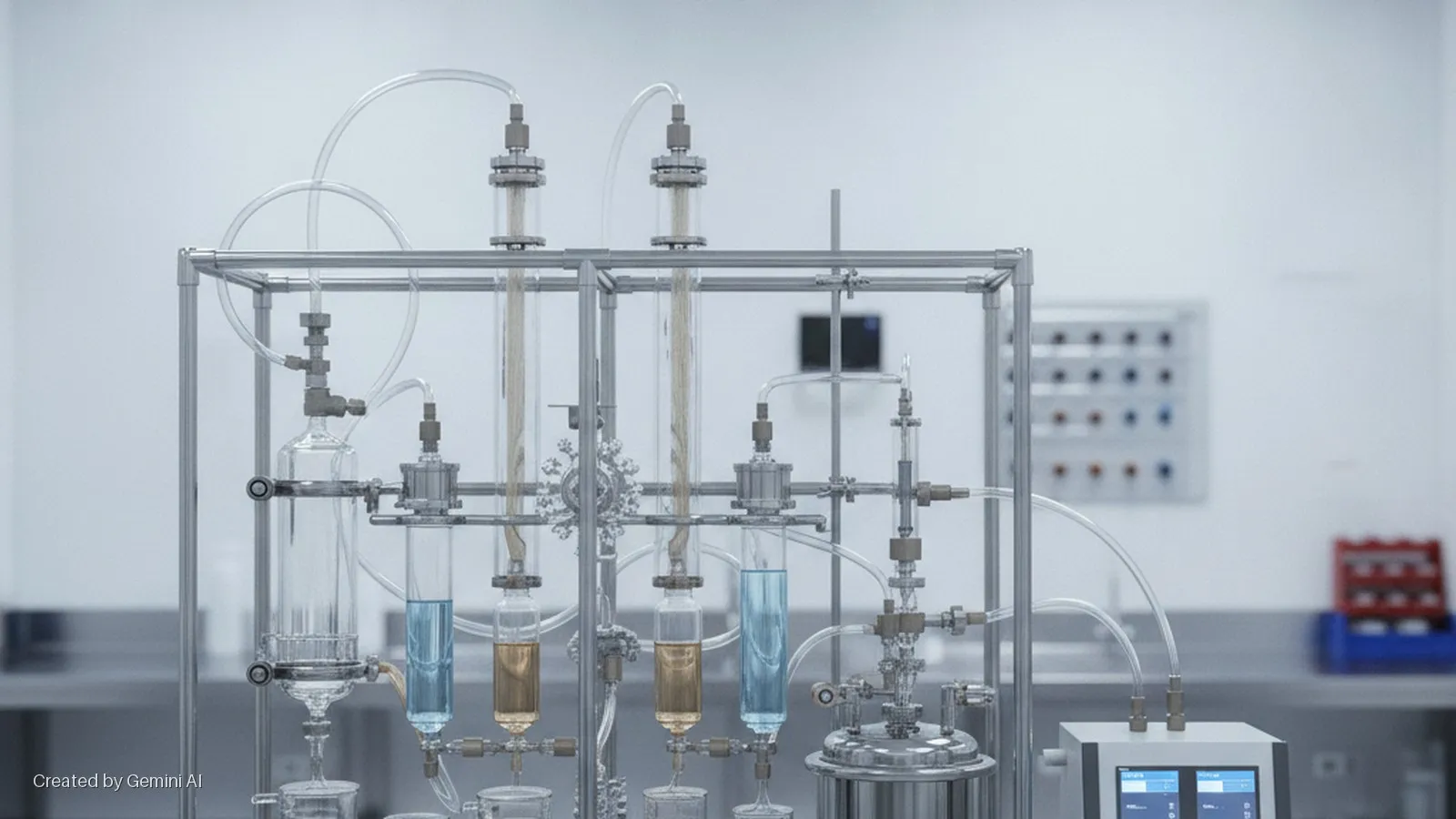
HiTech Minerals, the US subsidiary of ASX-listed Jindalee Lithium, has published results showing that high-purity magnesium oxide (MgO) can be produced from magnesium-bearing brine generated during processing of ore from the McDermitt Lithium Project in Oregon. The work, carried out by specialist laboratory Kemetco Research, achieved MgO grades above 93% and calciner conversion rates approaching 99.95%, providing what the company describes as a technical basis for assessing a magnesium by-product stream that the project's 2024 pre-feasibility study (PFS) had treated as waste.
The results are disclosed as HiTech Minerals prepares to list on Nasdaq as US Elemental Inc. under the ticker "ULIT", via a merger with special purpose acquisition company Constellation Acquisition Corp I, which is backed by Antarctica Capital, a New York-based investment firm with $10 billion in assets under management. The business combination has not yet closed, and no commercial viability for the magnesium pathway has been established.
The technical case
Kemetco tested two conversion routes. The first precipitated magnesium carbonate from magnesium sulphate (MgSO4) brine and then calcined it to MgO. The second crystallised hydrated MgSO4 before thermally converting it to anhydrous MgSO4 ahead of a reductive calcination step. Both routes achieved grades above 93% MgO. The earlier PFS had already demonstrated that sulphuric-acid leaching can extract up to 97.2% of magnesium from representative ore units alongside lithium, but had assigned no revenue credit to that stream.
If the pathway proves commercially scalable, it could also reduce waste-storage volumes and open the door to reagent recycling within the processing circuit. The company has commissioned independent market analysis, which identified magnesia as the largest-volume magnesium compound market, spanning refractory, industrial and environmental uses, with the US a net importer. Further testwork, engineering studies and a revised mineral resource estimate incorporating magnesium are planned, with updates expected in the fourth quarter of 2026.
Critical-mineral context
Magnesium sits near the top of US supply-chain concern. China controls approximately 90% of global primary magnesium output, and the closure of US Magnesium LLC in 2022, followed by its Chapter 11 bankruptcy filing in September 2025, left the country without a domestic primary producer. Magnesium is rated in the highest risk category of the US Geological Survey's 2025 draft critical minerals list and appears on the Department of Energy's Critical Materials List. Its applications span aluminium alloys, automotive lightweighting, aerospace components, titanium production, steel desulphurisation and military uses, making supply concentration a concern that extends well beyond the energy transition into defence and advanced manufacturing.
For a lithium project, the ability to produce a critical-mineral by-product from a previously discarded process stream has an obvious economic appeal. A magnesium credit could improve project economics at a time when lithium prices remain well below their 2022 peaks, making cost reduction a priority for developers seeking to attract project-finance capital.
Chief executive Ian Rodger said the results represent a meaningful technical step, but emphasised that commercial conclusions remain premature. "It is too early to draw concrete conclusions on commercial viability or project economics," he noted, "but our next phase will focus on completing the work necessary to decide whether a magnesium by-product will be incorporated into the upcoming McDermitt Feasibility Study."
The immediate milestones are the close of the SPAC merger and the Nasdaq listing, followed by the feasibility study decision on whether to integrate a magnesium processing circuit. Investors will also be watching for any indication of off-take interest in domestic MgO supply, given the absence of a US primary magnesium producer.