
Dynagas LNG Partners flags Russian sanctions risk as H1 profit rises

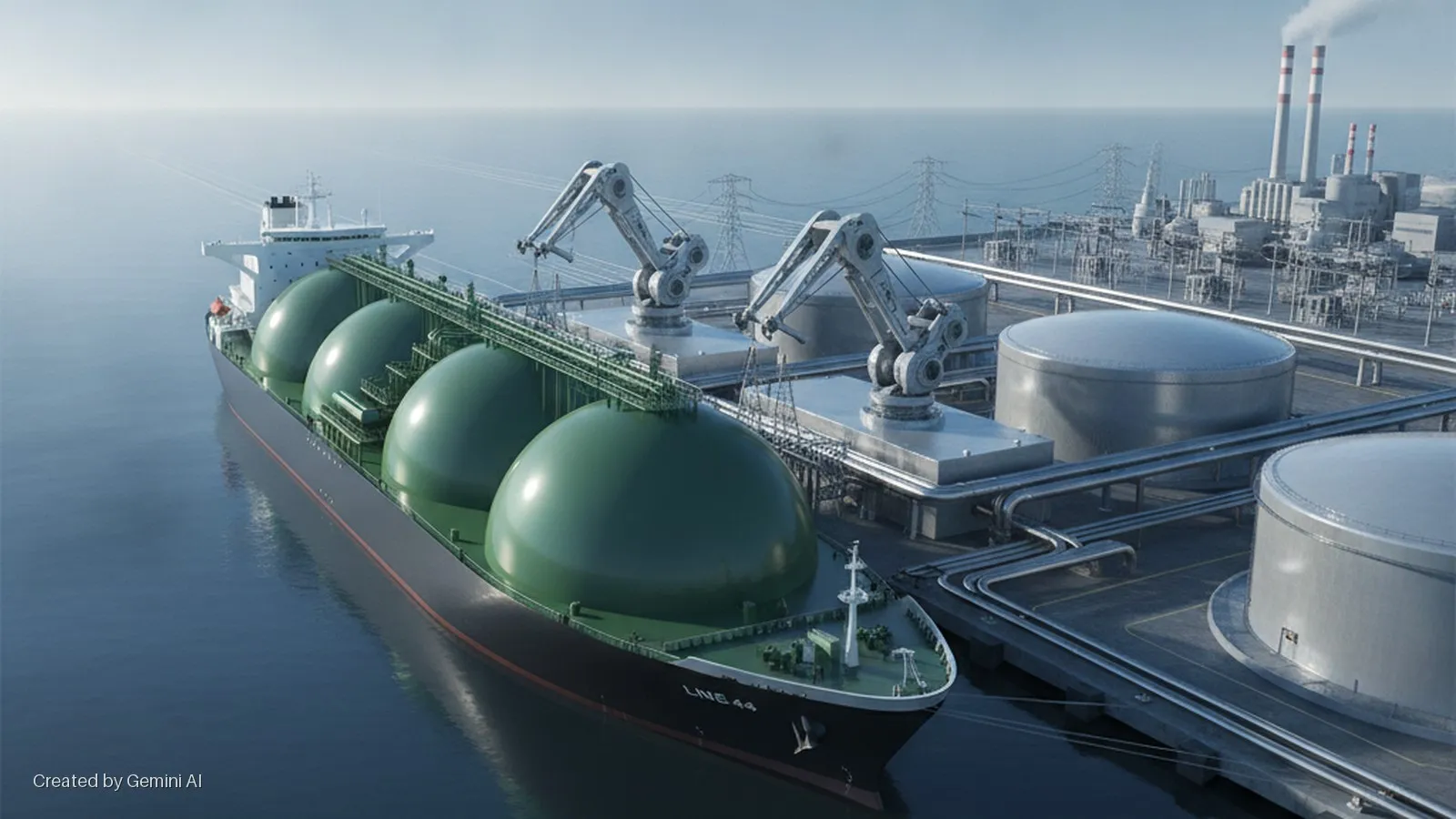
Dynagas LNG Partners (NYSE: DLNG), a Greek-owned operator of six liquefied natural gas (LNG) carriers, reported net income of $33.4 million for the six months ended 30 June 2026, up from $27.3 million in the same period a year earlier. Voyage revenues for the half rose 4.4% year on year to $81.1 million, supported by a new time charter for its vessel the Clean Energy with Rio Grande LNG and lower debt-service costs following continued deleveraging.
Fleet utilisation for the half-year was 95.7%, slipping from 99.7% in H1 2025 after the Clean Energy spent 20.5 days off-hire during a handover between charterers. The Partnership's contracted revenue backlog stood at $0.73 billion as of 8 September 2026, with an average remaining contract term of 4.4 years and 100% time-charter coverage locked in for both 2026 and 2027.
Russian sanctions exposure
The more consequential disclosure in the results concerns two of the Partnership's six vessels. The Yenisei River and Lena River operate under long-term charters running to 2033 and 2034 respectively with Yamal Trade Pte. Ltd., transporting Russian-produced LNG. Those two vessels accounted for 34.5% of total revenues in H1 2026.
The European Union's 19th sanctions package, adopted in October 2025, prohibits the import or transfer of Russian LNG with effect from January 2027 for qualifying long-term contracts. A subsequent 21st sanctions package, adopted in July 2026, introduced a limited derogation allowing transfers of Russian LNG destined for third countries under legacy contracts signed before February 2022, subject to annual review and a volume cap matching 2025 transfer levels. Dynagas says its Yamal charters fall within this derogation, but explicitly cautions that it cannot guarantee regulators or counterparties will agree, and that the EU Council retains the right to terminate the exemption following its annual review.
Separately, UK regulations effective January 2027 prohibit UK persons from providing maritime transportation services for Russian-origin LNG, including carriage to third countries. Dynagas said it expects to replace certain UK-based service providers as a result and cannot guarantee replacements will be available on comparable terms.
Market and policy context
The sanctions landscape around Russian LNG has tightened progressively since 2022 and remains one of the more acute commercial risks in the LNG shipping sector. Dynagas's situation illustrates a structural tension running through parts of the LNG carrier fleet: vessels contracted to Yamal-origin cargoes before the invasion of Ukraine on long multi-year charters now face a narrowing regulatory corridor, with each successive EU sanctions package reducing the headroom available to operators.
Broader LNG shipping markets have been shaped by European demand for non-Russian supply, with US Gulf Coast and Qatari LNG absorbing much of the redirected European import requirement. That reorientation has supported charter rates generally, with Dynagas reporting an average daily hire rate of approximately $71,810 per vessel in Q2 2026, up from $70,730 a year earlier. Net interest and finance costs fell 26.9% year on year to $3.8 million in the quarter, reflecting lower debt balances and a decline in the weighted average interest rate from 6.49% to 5.90%.
The key risk variables for investors are whether the EU Legacy Contract Derogation survives its first annual review, whether Yamal Trade continues to perform under the charters, and whether the UK service-provider transition can be completed without vessel downtime. A loss of revenue under either Yamal charter would, by the Partnership's own assessment, constitute a material adverse event and could trigger covenants in its debt agreements.
The Partnership declared a quarterly common unit distribution of $0.050 for Q2 2026, paid on 28 August, and a Series A Preferred distribution of $0.5625 per unit for the period to 11 August.