
Montauk Renewables opens $200m swine-biogas facility in North Carolina

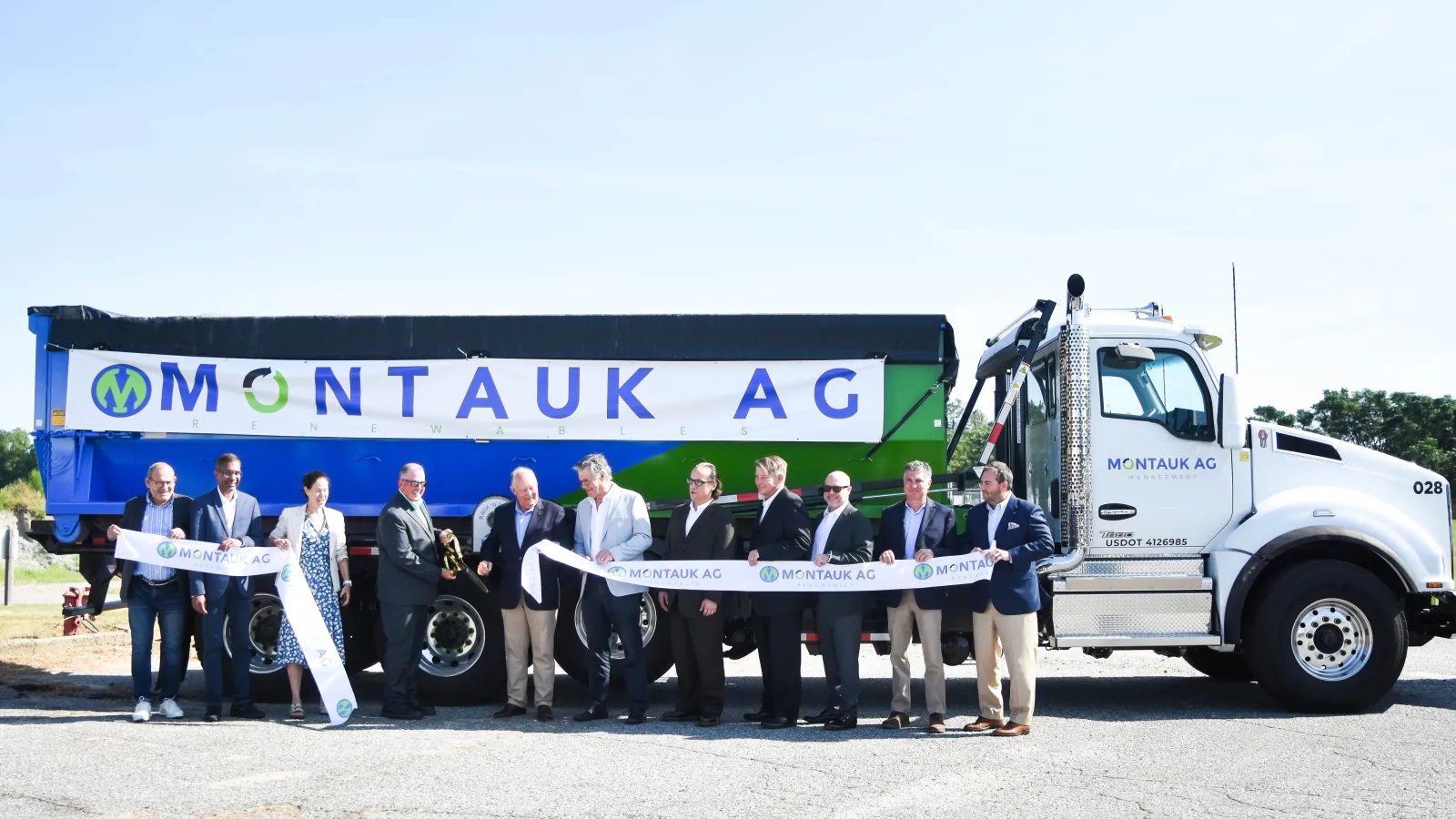
Montauk Renewables (NASDAQ: MNTK) has formally opened its Turkey, North Carolina facility, representing a $200 million capital investment in Sampson County. The project converts swine waste into renewable natural gas (RNG) and electricity, with the company reporting it has already secured long-term supply agreements with more than 80 individual farming locations providing access to over 415,000 hog spaces, which it describes as its first-phase development target.
The facility was built inside a converted Bay Valley Foods distribution centre. State and local officials joined Montauk's chief executive, Sean McClain, and board members at the opening ceremony. McClain called North Carolina farmers "the backbone" of the state's economy, noting the agreements in place as of the end of August.
The deal
Beyond the headline $200 million figure and the farming-location count, the company did not disclose the facility's nameplate RNG output capacity in megawatt-hours or million British thermal units per day, the contracted off-take price for its gas, or the project's expected revenue contribution. The release also notes biochar as a co-product: the process yields a carbon-rich solid that, according to NC Senator Brent Jackson, a Sampson County farmer and chairman of the state Senate's Agriculture, Energy and Environment Committee, can improve nutrient and water retention in agricultural soils.
Montauk sells both RNG and renewable electricity, monetising Environmental Attribute premiums available under federal and state policy frameworks, including the federal Renewable Fuel Standard (RFS), which assigns Renewable Identification Number (RIN) credits to qualifying biogas projects. RIN values are market-traded and can represent a significant proportion of RNG project economics, making policy continuity around the RFS a material variable for investors.
Market context
Swine-waste biogas is a well-established but niche segment within the broader RNG market, which spans landfill gas, agricultural digesters and wastewater treatment. It sits at the intersection of waste valorisation and advanced energy: methane that would otherwise vent from hog lagoons is captured, upgraded and either injected into the natural gas grid or burned for power. The co-production of biochar adds a potential soil-carbon revenue stream, though biochar's inclusion in voluntary carbon markets remains inconsistently standardised.
Montauk has more than 30 years of experience in landfill methane and now operates 14 projects across eight US states, making it one of the more established RNG developers on public markets. The North Carolina expansion represents a strategic move into agricultural biogas at scale, a segment that several larger energy companies and specialist climate-infrastructure funds have been targeting, attracted by the dual revenue streams of RINs and low-carbon fuel standard (LCFS) credits in states such as California.
North Carolina's hog industry is among the largest in the United States, with agriculture contributing more than $100 billion annually to the state economy, according to the NC Department of Agriculture. The density of swine operations in the coastal plain counties creates a concentrated feedstock opportunity that is difficult to replicate in most other US geographies.
Looking ahead, investors will focus on Montauk's ability to convert its 415,000-hog-space pipeline into fully contracted, operational capacity, and on whether the facility's production figures, once disclosed, support the economics implied by the $200 million capital outlay. The company has not indicated a timeline for reaching full first-phase throughput.