
EnBW deploys XCharge 480 kW fast chargers across Germany network

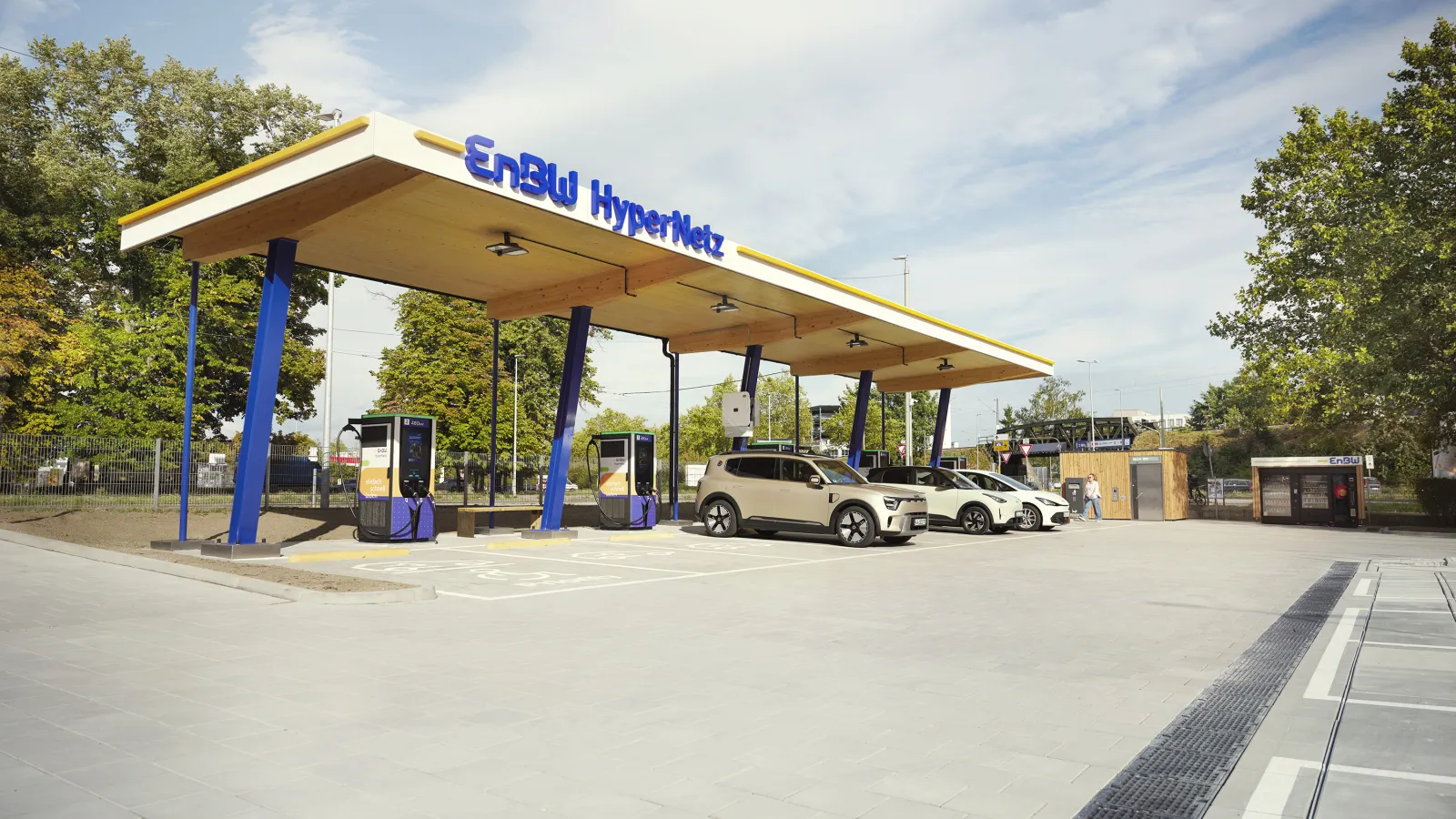
EnBW, the operator of Germany's largest fast-charging network, has begun deploying XCharge's C7 high-power charger, rated at 480 kW, at sites across its national infrastructure. The first installations are live at EnBW's flagship Karlsruhe headquarters site and a fast-charging hub in Nettetal, near the Dutch border. The company says further deployments at highway charging parks will follow before the end of 2026, with a "double-digit" number of new sites in scope.
The rollout follows a long-term supply partnership announced between EnBW and Nasdaq-listed XCharge (ticker: XCH) in February 2026, itself the result of a field trial in which XCharge units logged tens of thousands of charging sessions without disclosed failure metrics. No contract value or volume commitment was made public in either the February announcement or this release.
The technology case
At 480 kW, the C7 sits at the upper end of the current DC fast-charging power range. EnBW says the charger can add up to 640 km of driving range in 20 minutes, depending on vehicle capability. The system also supports dynamic power allocation, splitting available capacity between two simultaneous users in a way that, the company says, reduces wait times and maximises throughput per stall.
Lars Jacobs, chief commercial officer and acting chief technology officer of EnBW's e-mobility division, said the investment reflects a deliberate shift upward in hardware specification: "With XCharge's new 480 kW charging systems, EV drivers in the EnBW charging network benefit from short charging times, advanced technology, and high reliability." EnBW has stated the C7 will be prioritised at highway locations where customers want to maximise range in a brief stop, rather than at urban or retail sites where lower-power chargers can be matched to longer dwell times.
EnBW already operates more than 9,000 fast-charging points across Germany, making it among the largest charging network operators in Europe by installed base. Its stated expansion strategy covers three segments: long-distance routes, urban locations, and retail destinations, each with different infrastructure requirements.
Market context
The European fast-charging market is in a period of rapid hardware refresh. A first generation of 50 kW and 150 kW units, installed between 2019 and 2022, is being supplemented or replaced by 300 kW to 500 kW systems as the vehicle fleet catches up in charging capability. Several OEMs, including high-volume electric-vehicle manufacturers, now ship platforms capable of accepting 350 kW or above, creating genuine demand for the higher-power infrastructure.
XCharge competes in this space with established hardware suppliers including ABB E-mobility, Alpitronic, and Tritium, as well as proprietary networks operated by Tesla's Supercharger division. The competitive differentiator in network-operator procurement tends to be reliability data from large-scale field trials, unit cost, and after-sales service coverage rather than peak power rating alone, which is why EnBW's emphasis on the field-test track record is commercially significant.
EU policy is adding urgency to the hardware upgrade cycle. The Alternative Fuels Infrastructure Regulation (AFIR), now in force, requires minimum charging power thresholds at Trans-European Network corridors, pushing operators to retire lower-power units on major routes ahead of binding deadlines. Separately, Germany's national charging infrastructure programme has directed public co-investment toward high-power sites, further incentivising operators to accelerate deployments.
For XCharge, the EnBW contract represents a material commercial reference in a crowded European market. The company has not disclosed revenue contribution or unit volumes from the partnership. Investors and competitors will watch the pace of the highway-park rollout through the remainder of 2026 as the clearest indicator of how quickly the supply relationship is scaling.