
Hypercharge shifts to Level 2 as carbon credits surge 600%

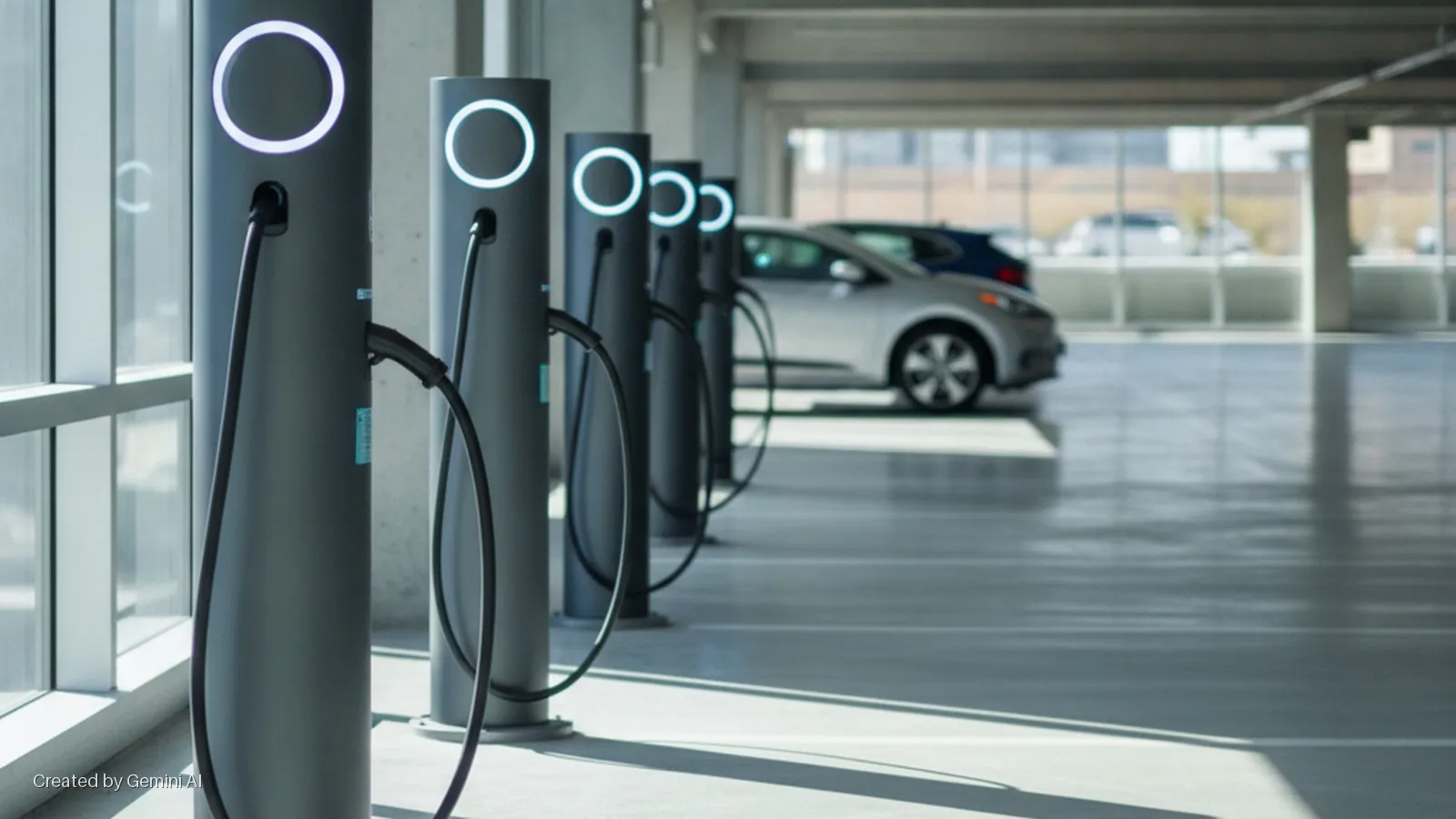
Hypercharge Networks, the Vancouver-based electric vehicle (EV) charging operator listed on the TSX Venture Exchange, posted first-quarter fiscal 2027 revenue of C$1.42 million, down 58% from C$3.4 million in the same period a year earlier. The drop reflects a deliberate strategic pivot away from one-off sales of DC fast charging equipment toward lower-volume but higher-margin Level 2 charger deployments, which generate recurring subscription and service income over time.
The headline revenue decline obscures a meaningful shift in the business mix. Gross margin expanded by 19 percentage points to 44%, up from 25% a year earlier, while subscription and service revenue grew 68% year-on-year to C$520,074. The company's sales backlog stood at C$3.49 million at 30 June 2026, up 68% from C$2.07 million at the end of the prior quarter. Comprehensive loss for the quarter widened to C$876,583, roughly double the C$402,877 recorded a year before, driven by higher operating costs including one-time expenses linked to the acquisition of rival charge-point operator Eddie.
The Eddie acquisition and network scale
Effective 1 May 2026, Hypercharge acquired Eddie from AXSO, a transaction that added more than 2,700 charging ports and extended the company's footprint into Québec. Hypercharge's total network now exceeds 9,400 ports, comprising more than 6,700 delivered by the company itself and the Eddie estate. The company said the deal also brought the Eddie brand and associated customer relationships, deepening its recurring revenue base. Integration costs contributed to the 28% rise in operating expenses to C$1.61 million during the quarter.
The company also promoted Kyle Moncrief, CFA, who oversaw the Eddie integration, to chief financial officer with effect from 27 August 2026, succeeding Alex McAulay.
Carbon credits and policy tailwind
A notable line in the results was C$1.74 million in cash proceeds from the sale of compliance credits under Canada's Clean Fuel Regulations (CFR), representing an increase of more than 600% on the C$236,058 received for the 2024 calendar year. Under the CFR framework, operators of eligible EV charging infrastructure can earn credits that fuel suppliers must buy to meet their blending obligations; Hypercharge is then required to reinvest the proceeds in eligible EV infrastructure or programmes that reduce EV ownership costs. The company has launched Hypercharge Home Club, a residential charging rewards programme, as one vehicle for that reinvestment.
The CFR credit mechanism illustrates a broader dynamic in the Canadian EV-charging market: compliance carbon markets are creating a secondary revenue stream that can partially offset the capital-intensive work of network build-out. For smaller operators such as Hypercharge, these proceeds can be material relative to total quarterly revenue. Several other charge-point operators in North America are pursuing analogous credit programmes under US Clean Fuel Standard schemes in states such as California, where Low Carbon Fuel Standard credits have long been a significant income line for charging networks.
Market context and outlook
The North American EV charging market is bifurcating. A handful of well-capitalised operators are racing to build DC fast charging corridors on highways, while a second tier of commercial and residential Level 2 networks competes on software, subscription lock-in, and margin quality. Hypercharge is positioning firmly in the latter camp. The company's registered user base has passed 55,000 on its mobile application, a metric it frames as a driver for future software and service-based revenue.
President and chief executive David Bibby said the company's focus through the remainder of fiscal 2027 will be converting the sales backlog into revenue, integrating Eddie, and advancing strategic partnership opportunities. Investors will watch whether recurring revenue can grow fast enough to offset the top-line drag from reduced hardware sales, and whether the CFR credit windfall is repeatable at a similar scale in the 2026 calendar year.