
Intouch Insight C-store Report Flags EV Charging Gap at Forecourts
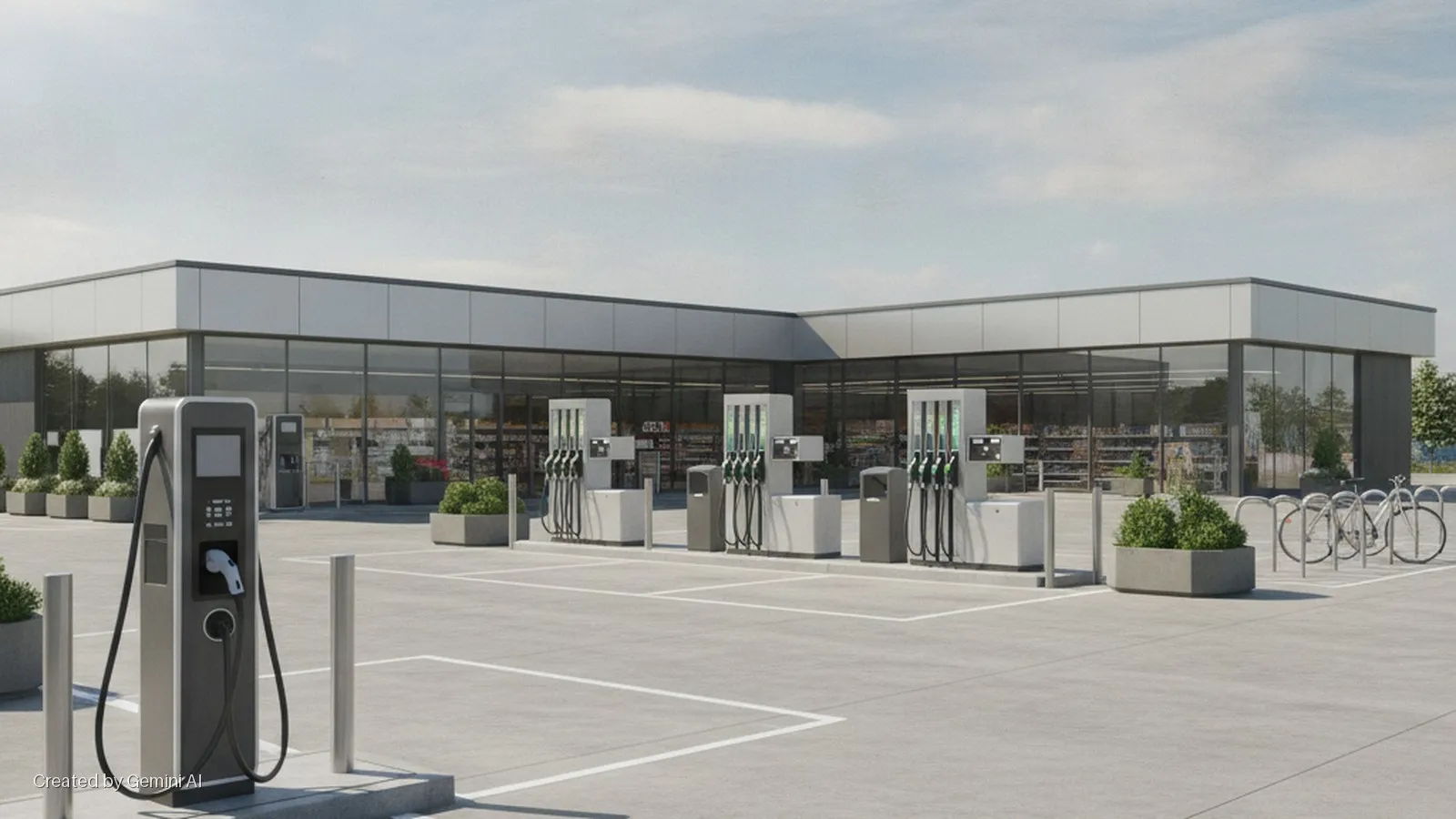
A new industry report from customer-experience firm Intouch Insight has found that just 6% of convenience store locations audited in 2026 have electric-vehicle (EV) charging infrastructure on site, a figure the company says illustrates how far most operators still have to travel as the traditional fuel forecourt transforms around low-carbon mobility.\n\nThe report, published by the TSXV- and OTCQX-listed firm on 16 June, identifies six trends shaping the convenience store (c-store) sector in 2026, ranging from the growth of made-to-order foodservice and specialist beverage programmes to the emergence of "third place" store formats designed to encourage longer visits. EV charging sits alongside those operational trends as a structural shift with direct read-across for the energy transition.\n\n## The EV forecourt opportunity\n\nThe 6% EV charging penetration figure is the most directly actionable data point for Cleantech Times readers. C-stores represent one of the largest and most distributed potential networks for public EV charging in markets such as the United States and Canada: there are an estimated 150,000 c-store sites in the US alone, dwarfing the current public charging estate. The low current penetration suggests that the bulk of c-store EV charging roll-out lies ahead, representing a significant deployment opportunity for charging-hardware manufacturers, charge-point operators and the utilities or independent power producers that would supply the electricity.\n\nThe Intouch Insight data captures the current baseline but does not break down charging capacity by kilowatt rating, connector standard, or operator network. The distinction matters commercially: a two-port Level 2 charger suited to a 30-minute dwell time supports a fundamentally different business model than a DC fast charger capable of adding 100 miles of range in ten minutes. Neither figure nor the associated energy demand per site is disclosed in the release.\n\n## Market and policy context\n\nThe c-store sector's slow EV charging adoption reflects a broader tension in retail forecourt economics. Fuel margin on liquid hydrocarbons remains the dominant revenue line for many operators, and the capital outlay for DC fast-charging infrastructure, grid upgrades included, can run to hundreds of thousands of dollars per site. Operators are watching for demand certainty before committing.\n\nIn North America, the US National Electric Vehicle Infrastructure (NEVI) programme has directed federal funding toward highway-corridor charging, which overlaps with the highway c-store estate. The Inflation Reduction Act's 30C alternative-fuel vehicle refuelling property tax credit, which covers EV charging equipment, provides a further incentive for site operators to invest. In Canada, the Zero Emission Vehicle Infrastructure Programme (ZEVIP) performs a similar role. Whether those incentives are sufficient to accelerate c-store charging roll-out at scale remains an open question: network operators such as Blink, EVgo and ChargePoint have all pursued retail-site partnerships, but conversion rates across the broader c-store estate remain low.\n\nThe Intouch Insight report frames the EV charging gap primarily as a customer-experience and competitive challenge rather than an energy policy issue. Cameron Watt, president and chief executive, said that as locations "move beyond the traditional and begin functioning more like third places, operators need to define what great execution looks like for each format and customer mission." That framing points to a longer dwell time per visit, which in turn strengthens the commercial case for on-site charging relative to the legacy fuel-and-go model.\n\nFor infrastructure investors and charge-point operators, the data reinforces the thesis that c-store chains represent an underpenetrated distribution channel. The key near-term signals to watch are whether major c-store networks such as Alimentation Couche-Tard, Casey's or TravelCenters of America accelerate charging commitments in their next capital programmes, and whether utility demand-charge structures evolve to make high-power charging at smaller retail sites economically viable.