
Casella and Waga Energy bring 610,000 MMBtu RNG plant online in New York

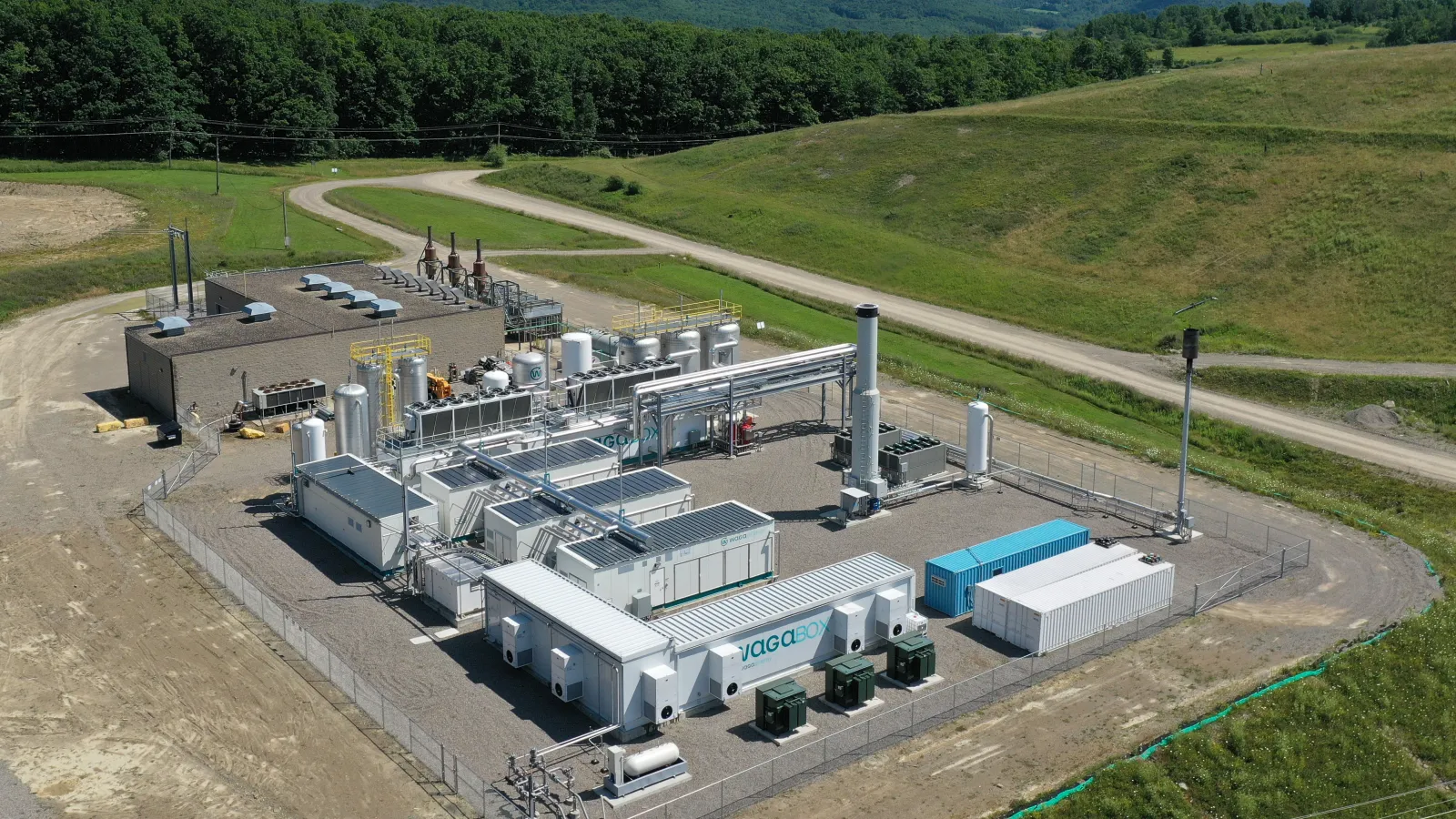
Casella Waste Systems (Nasdaq: CWST) and Euronext-listed Waga Energy have commissioned a renewable natural gas (RNG) facility at the Hyland Landfill in Angelica, New York, marking the second of three joint projects the partners plan to bring online. At 3,000 standard cubic feet per minute (SCFM) of installed processing capacity, the plant is rated to produce up to 610,000 MMBtu (180 GWh) of RNG annually, making it one of the larger units in Waga's US portfolio.
RNG is produced by upgrading raw landfill gas, which is roughly half methane and half carbon dioxide, into pipeline-quality biomethane that can substitute for fossil natural gas. Waga uses a patented purification unit it calls WAGABOX, which strips out carbon dioxide and trace contaminants to meet gas-grid specifications. The Hyland output is injected directly into the Eastern Gas Transmission and Storage network, bypassing the need for a dedicated local offtaker.
Deal structure
Under the terms of the agreement, Waga deployed all of the capital required to build and will own and operate the facility for 20 years. Casella and Waga share RNG sales revenue over that period. Neither company disclosed the total construction cost, the contracted revenue-share ratio, or the sale price per MMBtu. Casella's chief executive Ned Coletta described the decision to work with RNG specialists as a "strategic decision to recover value from the waste it manages", noting this is the fourth RNG project the company has brought online with Waga.
The project is expected to avoid around 47,000 tonnes of CO2-equivalent emissions annually, calculated using the US Environmental Protection Agency's Landfill Gas Energy Benefits Calculator. The project is also expected to qualify for incentives under the US Inflation Reduction Act (IRA), though Casella did not specify which credits or confirm whether a qualifying application has been submitted.
Market context
Landfill-gas-to-RNG is one of the more commercially mature segments of the waste-valorisation market in North America. Unlike biogas upgrading at agricultural or wastewater sites, landfill projects benefit from large, concentrated methane streams and existing gas-collection infrastructure. The RNG sector in the US is underpinned by Renewable Fuel Standard (RFS) credits, known as RINs, and by state low-carbon fuel standards in California and Oregon, which together can make landfill RNG among the most lucrative pathways under current policy.
The IRA extended and expanded the 45Z clean-fuels production credit, which covers RNG used as transport fuel, and the 45Q credit for carbon management. How Hyland qualifies will depend on the end-use pathway and the project's carbon-intensity score. Developers have been racing to file qualifying applications ahead of expected regulatory guidance updates.
Waga's global portfolio now spans 36 operating WAGABOX units across France, Spain, Canada and the United States, with a further 19 under construction, representing more than 6.5 million MMBtu of annual installed capacity. The Hyland plant sits alongside the previously commissioned Chemung County facility as the second Casella-Waga project live in New York State. A third joint project is still to enter operation.
Policy path
RNG's long-term economics in the US rest on the durability of RFS2 RIN pricing, state clean-fuel standards, and IRA credits, all of which face varying degrees of regulatory and political uncertainty. A sustained drop in RIN values, which has occurred before during periods of exemption-waiver activity, can materially erode project returns. Investors tracking Casella's resource-recovery strategy will watch for disclosure of the revenue-share terms, confirmation of which IRA credit pathway applies to Hyland, and the commissioning timeline for the third project in the partnership.